








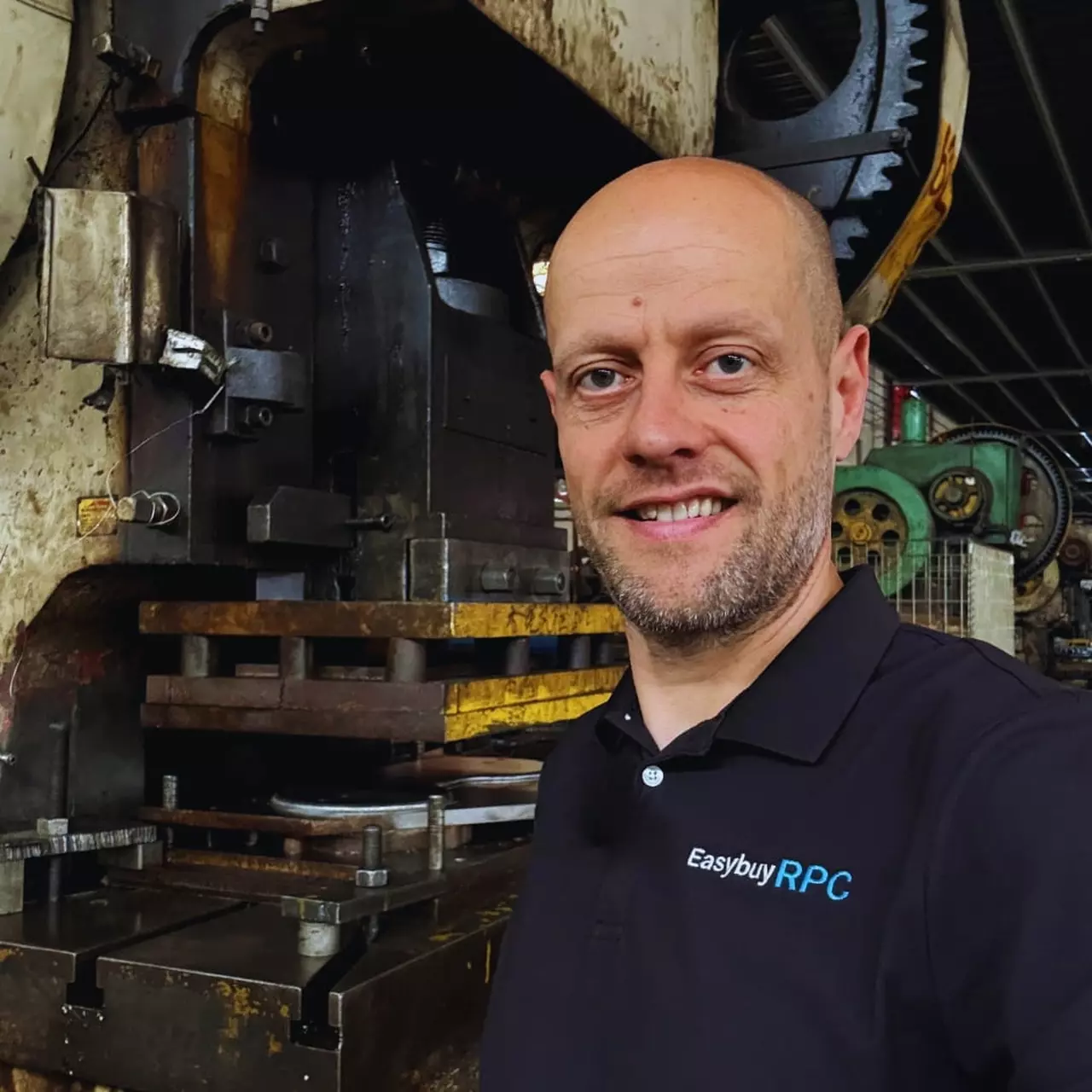
After 11 years in Guangdong workshops, I have seen mold projects drift not because of the mold maker, but because of a blind spot.
Launching a mold in China: what you will never see from France
When a French industrialist decides to have a mold made in Chinahe rarely goes into the unknown.
He knows his product. He masters his tolerances, his material constraints, his functional zones. It transmitted clean 3D files, a specifications clear, precise plans.
It is not his expertise that is in question.
The problem begins elsewhere: at the moment when the project enters the Chinese workshop, and when important decisions are made without it.
What the customer saw. What the factory showed.
I recently followed the mold project of a French industrialist in the technical sector. Injected plastic case, two half-shells, precise assembly constraints. Experienced customer. Solid specifications. Chinese mold maker selected based on quotes and references.
From a distance, the project was progressing normally.
Machining photos. Schedule announced as respected. First samples sent after T1: parts visually correct in the photos sent by the factory.
Then the problem appeared during assembly. Some half shells required clipping. Others showed a slight light. The mold maker explained that the problem probably came from design or too demanding a tolerance.
Classic.
I intervened on site before the validation of the corrections for T2.
What I saw next to the press.
The samples sent to the customer were selected from the best pieces.
Next to the press, there were the others: slight deformation, marks near the clipping areas, variation in adjustment between the two half-shells. Parts that the factory had not deemed useful to show.
The test was also carried out with settings which made it possible to produce a few presentable parts but without guaranteeing stable production. The factory knew how to produce acceptable samples. The process was not secure.
What the customer did not see from France:
Rejected parts. The adjustments necessary to obtain the best parts. Instability between samples. The way the mold maker interpreted the defect. And above all: the proposed correction treated the symptom, not the cause.
In a previous column, I explained that the Chinese supplier does not necessarily lie he moves forward according to his own priorities when no one is watching. On a mold project, this logic is even more sensitive. Because when the steel is cut, the room for maneuver decreases.
The method that changed the outcome.
The resolution did not start with fixing the problem.
She started by documenting precisely what was wrong: detailed photos, location of the affected areas, comparison between good and bad parts, separation between aesthetic defects and functional defects.
Then, the corrections for T2 were supervised point by point: local recovery of the mold on the clipping zone, verification of dimensional stability, new test with stabilized parameters, control of the parts after cooling not only at immediate exit from the press.
The validation of T2 was not done on photos. It was carried out on a precise grid: quality of assembly, clearance between the two hulls, regularity on several parts, critical dimensions, repeatability.
This is not plastics processing that the client did not master.
It’s the field method that he couldn’t practice remotely.
The real risk of a mold project in China
This case is not exceptional. It is representative.
A manufacturer can perfectly master his product and lose control of his mold project not because he does not know his job, but because local execution was not followed closely enough when it mattered.
After eleven years in the Guangdong workshops, I have seen mold projects go awry not because of a bad mold maker, but because of a blind spot: the period between T1 and T2, when the supplier works alone on the corrections and the client validates on photos.
It is in this blind spot that decisions are made.
And this is where a field presence changes the result, not to replace the expertise of the French plastics manufacturer, but to extend it to the workshop, when it really counts.
Nicolas Allard, founder Easybuyrpc and field agent in China for 11 years, supports SMEs French, Belgian and Swiss in their import operations.


