








We sell hacks to e-retailers to appear in Google and in ChatGPT responses. Behind the technical vocabulary hides an old practice that is making a comeback.
A word has become established in digital marketing in recent months: cheat code. Brands are promised shortcuts to exist on Google and, above all, to be cited by generative artificial intelligence. One of these shortcuts is particularly rising: making yourself visible on community forums, which have become a favorite source of engines and AIs.
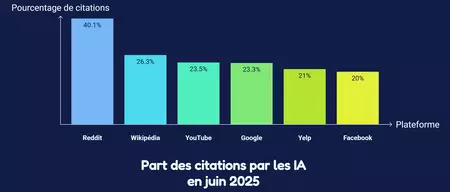
The initial intuition is correct. These spaces concentrate real conversations, and the machines see this as a signal of trust. The figures confirm it: according to an analysis of 150,000 citations conducted by Semrush and relayed by Statista in June 2025, Reddit has become the first source of information cited by AI, with 40.1% of citations, ahead of Wikipedia (26.3%), YouTube (23.5%) and Google itself (23.3%). This is no coincidence: Google signed an agreement in 2024 for access to Reddit data estimated at $60 million. So the problem is not the channel. It is in the method that we sell to exploit it.
Source: Statista/Semrush, June 2025, 150,000 citations
The return of an old deception, under a new name
Scratching the veneer from these methods often reveals the same mechanism: create a multitude of accounts, “heat” them for weeks so that they pass for real users, then fabricate conversations from scratch. A question asked with one account, a laudatory answer posted with another, seemingly nothing. All while hiding the fact that a brand is hidden behind it.
This practice has a name, predating search: astroturfing. The fabrication of a false spontaneous movement, of a consensus that does not exist. The term dates from the 1980s. What changes in 2026 is not the technique, it is its performance.
Why AI is changing the scale of the problem
As long as the false review only deceived a passing Internet user, its impact remained limited. Generative AI has changed everything. When a consumer asks “what is the best solution for X”, the machine does not return ten links to sort: it synthesizes an answer, decides, recommends. And to decide, she relies on what she reads, particularly on these forums.
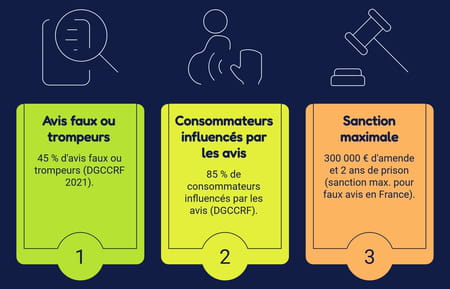
Manipulating a few discussions no longer biases a single thread. This can contaminate the single answer that thousands of users will receive as truth. The phenomenon is all the more worrying as fake reviews are already thriving outside of AI: according to a DGCCRF survey, nearly 45% of reviews published online are false or misleading, even though 85% of consumers say they trust them before purchasing. We graft proven manipulation mechanics onto the most prescriptive channel ever to appear.
 Source: DGCCRF
The double bill that no one mentions
What we forget to tell the seduced brands is that they always pay twice.
The first invoice is mechanical. These practices violate the terms of use of the platforms, which invest in the detection of fake accounts and coordinated networks. The day the accounts fall, all the visibility built on them collapses. We didn’t build anything, we rented an illusion. And the legal terrain is not far away: in France, presenting commercial recommendations under the appearance of disinterested opinions exposes the regime to deceptive commercial practices, punishable by sanctions of up to €300,000 in fines and two years of imprisonment. The DGCCRF has also strengthened its resources, with more than 1,200 establishments inspected since July 2023 and a dedicated tool, “Polygraph”, to track down false reviews.
The second bill is heavier, because it cannot be repaired. The day a community discovers that a brand has manipulated its conversations, it’s not traffic that it loses, it’s trust. But above all, online communities hate being exploited, and they have long memories. A lost ranking is regained; a reputation as a cheater, much more difficult.
The real subject: confusing appearing recommended and being recommendable
These methods thrive on a seductive promise: skipping the hardest step, getting really good at it, to the point where you get recommended without you having to cite yourself.
It’s the opposite of what lasts, and the data proves it. A study by Profound shows that the average Reddit post cited by an AI is about a year old, and that 4% of cited content is from 2019 or earlier. In other words, AI does not reward the freshly made viral hit, but the long and accumulated presence. The fake one is in a hurry. He plays against the very nature of what he is trying to manipulate.
The arrival of AI in product discovery is not an invitation to cheat more effectively. This is what should bury these methods: the more machines become capable of judging the real legitimacy of a brand, the more the fake ends up being seen.
The real question for a manager is therefore not “how to appear in the AI’s responses”. It’s “does my brand deserve to be there”. The first leads to hacks that ultimately backfire. The second leads to less spectacular work, but which lasts over time.


