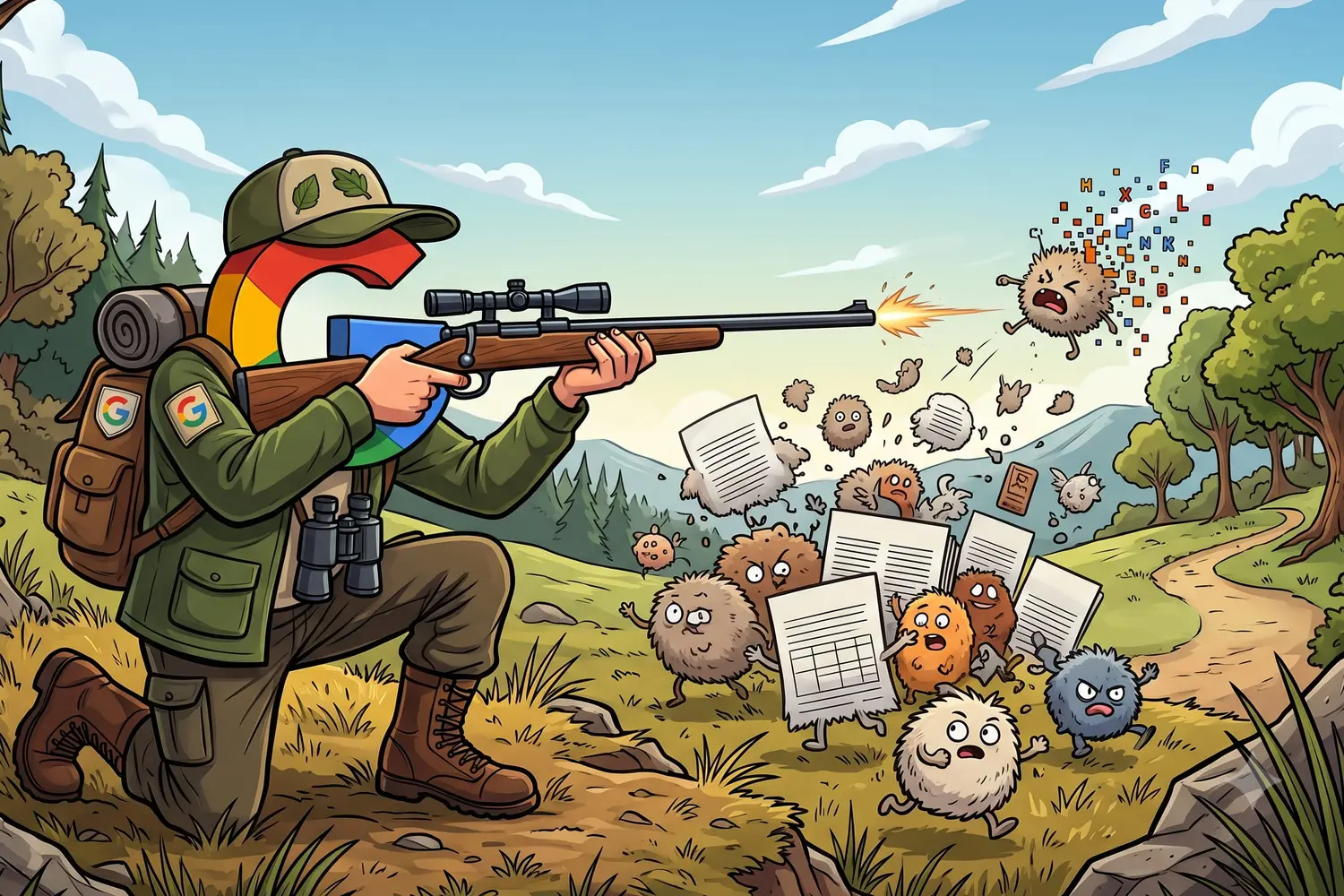










For 20 years, SEO was about pleasing Google. Today, a customer discovers a brand on TikTok, forms an opinion via the press, compares on ChatGpt without ever searching on Google.
A journey that no longer has anything linear
The classic user journey, the one that was still taught five years ago, looked like a straight line: need, request, click, conversion. This straight line no longer exists. It has exploded into a constellation of touchpoints that feed off each other:
- Social networks, where TikTok, YouTube or Reddit serve as real search engines, especially for younger generations.
- Press relations, the mention of which by a media or a recognized expert nourishes human reputation as much as the way in which AI judges the authority of a brand.
- Organic SEO, presence in classic Google or Bing results.
- The paid, which captures already hot intentions.
- The referral, generated by recommendations, partnerships, external links.
A company that continues to manage these five levers in silos, an SEO service provider on one side, a PR agency on the other, with no one to monitor what is said about it in the AI, is missing the essential: the real journey of its customers.
What it really changes
Two facts, in my opinion, sum up the shift.
The first is that the organic click ceases to be the benchmark measurement. Google’s AI Overviews and direct responses from chatbots make it possible to obtain information without ever visiting a site. What has been driving SEO for twenty years, traffic, is becoming an increasingly unreliable indicator.
The second is that AIs do not necessarily cite who is first on Google. They source their answers according to their own criteria: freshness of content, presence of verifiable statistics, clarity of definitions, perceived authority of the field. A site not in the top 10 may very well become the preferred source of a ChatGPT or Perplexity response. And conversely, a well-ranked site may find itself completely absent from generative responses.
Dilute exposure, reduce risk
There’s a risk management lesson behind this, and it’s true for any leader. A company whose 90% of traffic comes from Google SEO is exposed to a risk of dependence: an algorithm update, the massive arrival of AI Overviews on its key queries, and a significant part of the activity falters overnight.
Diversifying your acquisition channels, social networks, PR, SEO, paid, referral, is no longer just a question of marketing performance. It’s a question of resilience. By spreading your exposure over several surfaces, you dilute the risk: if one channel contracts, the others continue to keep the brand alive. It’s the same logic as a well-diversified investment portfolio, this time applied to visibility.
Become the reference for your subject
Faced with this dispersion, a strategy stands out: stop chasing dozens of isolated keywords and aim for a more ambitious objective, becoming the recognized reference for your theme. Cover all the questions an audience has on a given topic, with such depth and consistency that no competitor is seen as legitimate.
It is this status of semantic champion, recognized both humanly and algorithmically, which pushes an AI to spontaneously cite a brand as soon as it is questioned on the subject, rather than a generic competitor drowned in the crowd. This authority is also built off-site: being mentioned on Reddit, YouTube, in the specialized press, or by recognized experts in the sector weighs more and more in the way in which AIs evaluate the reliability of a source. A reputation that is significantly more difficult to manipulate than traditional backlinks.
In the same spirit, everything that cannot be copied becomes valuable: proprietary data, original studies, real feedback, expert points of view. This type of content has value that AI cannot reproduce itself, increasing the chances of being cited as a source rather than diluted in a generic summary.
The Most Urgent Point: Tracking What AIs Say About You
If we had to remember only one emergency, it would be this one. A growing part of information traffic is captured and then absorbed in the responses of generative AI: the user obtains his response without ever clicking, and classic SEO loses visibility on this type of query without it necessarily appearing in Google Search Console.
In other words, you can lose real visibility for months without seeing it coming in your usual dashboards. The only solution is to set up dedicated monitoring: AI citation monitoring tools, or quite simply regular audits consisting of questioning ChatGPT, Perplexity and Gemini yourself in your own sector, to check if you appear there, and how.
SEO is not dead, it is being completed
I don’t believe we have to choose between Google and generative AI. You have to build a strategy that works for both at the same time. Well-structured, precise and sourced content continues to perform well on Google, and at the same time serves as raw material for generative AI, which relies heavily on content already indexed and recognized.
The basis remains the same as before: real expertise, clarity, structure, authority. What is changing is the number of entry points through which a customer can now discover a brand. To ignore this fragmentation is to accept becoming invisible over an increasing part of the research journey.