









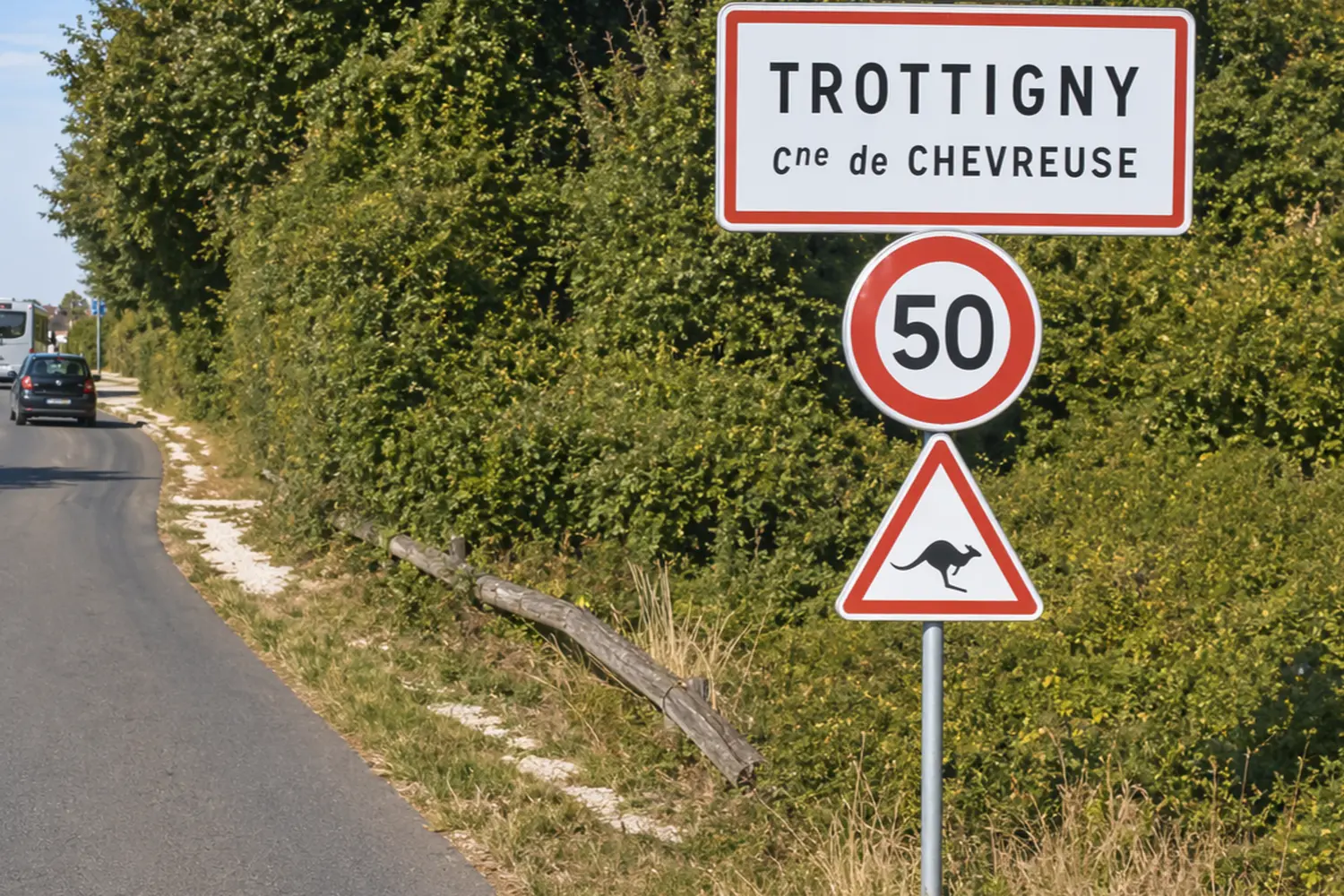
In France, signposts attest to the presence of small gray kangaroos. They have lived in the wild for almost 50 years.
Up to 20 kilograms, around a meter high and a small ventral pouch: they usually inhabit Tasmania or Australia, but wallabies have been living in France for almost 50 years. To limit road accidents, several municipalities have installed astonishing traffic signs.
Because far from Oceania and for at least 20 years, “kangaroo” signs have been installed along the road. Particular attention is requested from motorists: “out of a population estimated at around a hundred individuals, between 20 and 40 wallabies would be struck each year, without all succumbing to their injuries”, describes a study on the wallaby of the Rambouillet forest, dating from 2015.
A high number of accidents which constitutes “the main factor regulating Rambolitan wallabies.” Accidents which take place “along the departmental roads”, “either early in the morning or after dark”. An astonishing situation for this region which did not exist a few decades ago.
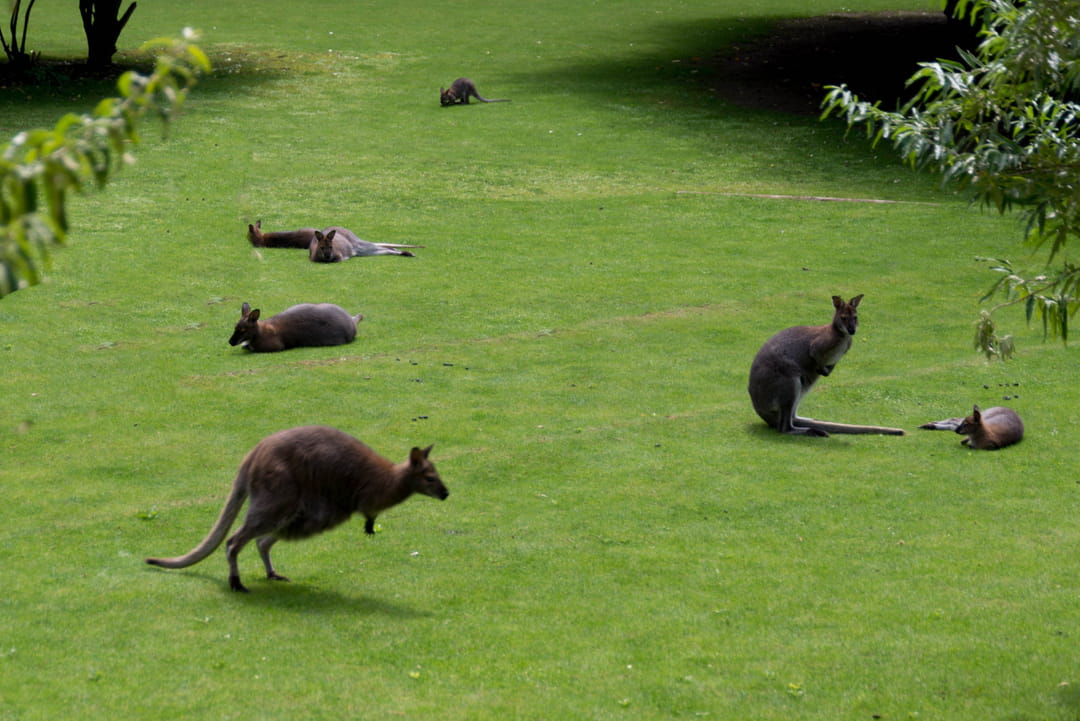
At the end of the 1970s, around fifty Bennett’s wallabies escaped from the Sauvage Zoological Reserve, a former park located ten kilometers from Rambouillet. If around thirty of the fugitives were caught at the time, around twenty individuals managed to reach a wood not far away. Between the 1970s and the closure of the reserve in 2017, “other individuals (a few units per year) would have managed to escape from the park again,” add the authors of the study.
Why did these wallabies escape? The exact causes do not yet seem to be known: some suggest a collapse of the reserve’s fences due to lack of maintenance, others an act of malicious intent (animals removed and then released into the wild), or even an intentional release by park staff who had to deal with an overpopulation of the species.
Whatever the real reason, the Rambolitan wallabies found in this new environment a temperate climate surprisingly similar to that of southeastern Australia. They reproduced to the point of reaching more than a hundred individuals, thus constituting “a unique case in France”, specify the authors.
Since the closure of the zoo, their population has tended to decline. But even today, around Rambouillet, between the deer and wild boars, marsupials and their young also hide.