








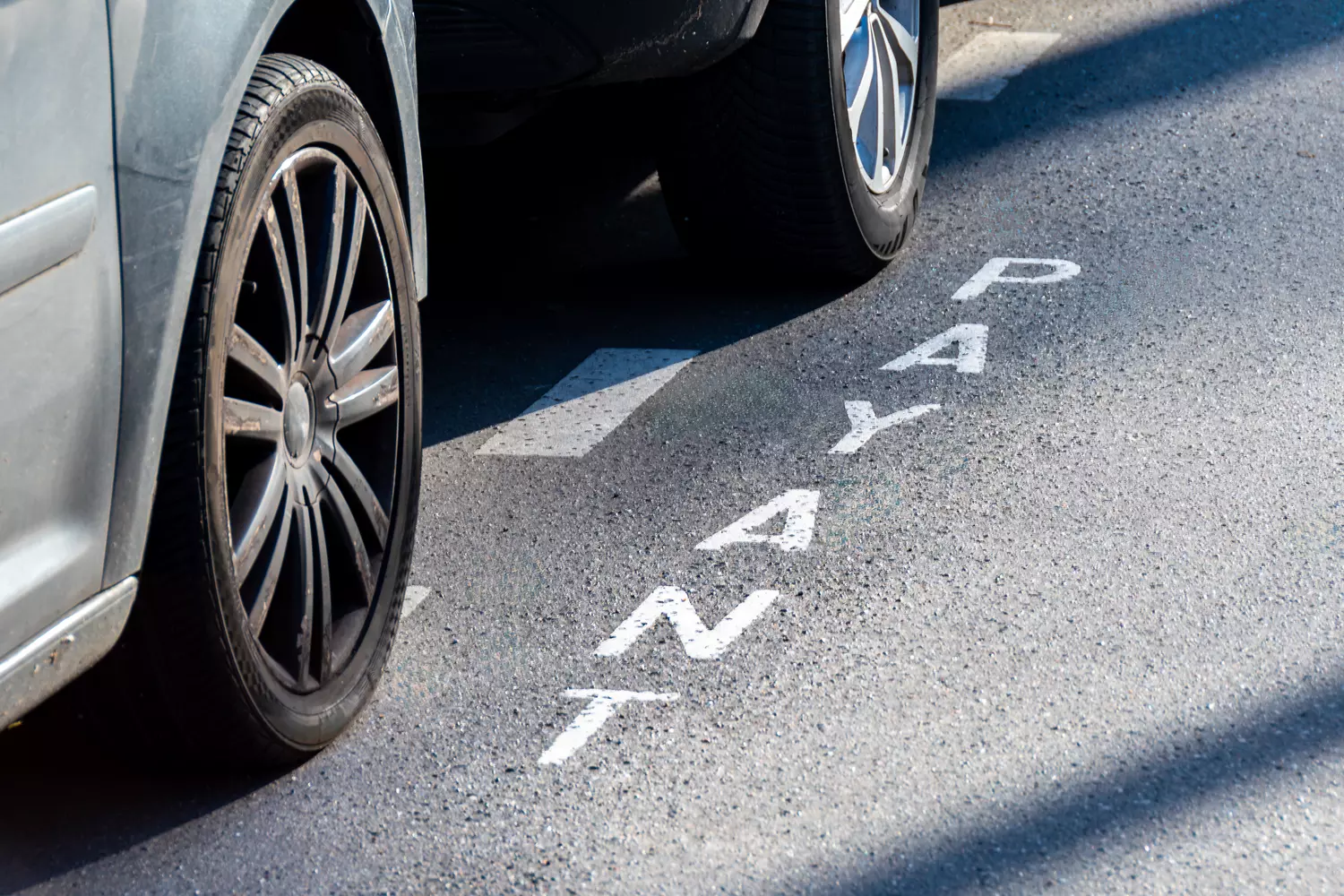
Communities have no choice, road law obliges them. Thousands of parking spaces will be removed from public spaces.
Nearly 1,000 places in Nantes, 4,500 in Lille, 3,300 in Lyon: in France, thousands of parking spaces are doomed to disappear. Objective: to make pedestrians more visible and thus reduce collisions with motorists.
Concretely, “no parking space can be provided on the roadway five meters upstream of pedestrian crossings”, specifies article L. 118-5-1 of the road code. In other words, it is prohibited to create new places, but also to maintain those that already exist: “The compliance work must have been carried out no later than December 31, 2026,” continues the article of law.
“This results in the addition of ground markings, the installation of bicycle racks, the installation of bollards, or even rearrangements of public spaces (advancement of sidewalks, greening, etc.),” summarizes the Nantes metropolis in a press release to residents. All these changes are also accompanied by rules already in force for motorists.

Since July 2015, article R. 417-11 of Traffic Laws specifies that stopping and parking are prohibited “within a distance of five meters upstream of pedestrian crossings in the direction of traffic, outside of spaces marked for this purpose.” Failure to respect this rule is subject to a fixed fine of 135 euros. As the vehicle is considered very inconvenient, it may be immobilized and impounded.
As of January 1, 2027, this article will be modified: the mention “outside the locations designated for this purpose” will be deleted.
Clearing pedestrian crossings is one of the major challenges of road safety. The center for studies on risks and mobility (Cerema) has devoted a number of articles and reports to the subject. In 2019, almost a third of pedestrians killed in an accident died in a pedestrian crossing.
For six years, Cerema has been supporting communities to make pedestrian crossings more visible. But the study center insists: “The regulatory distance of five meters upstream of a pedestrian crossing is not always sufficient” for the safety of pedestrians. This varies depending on the nature of the route. On a 50 km/h street, Cerema advises expanding the space between the parking lot and the pedestrian crossing by seven to ten meters.
For ideal security, simply removing these parking spaces is not enough either, indicates Cerema. For a space to be truly secure, “it is preferable to install an element which is physically dissuasive and low in height. Indeed, an empty space risks being colonized by other uses, thus calling into question the clear visibility.”


