









Due to an error in their income tax return, a couple of taxpayers must pay additional income tax to the tax authorities. After the tax adjustment, they force their bank to reimburse the taxes for them.
The bill could have been particularly steep for this couple of taxpayers. However, it was their bank that ended up putting its hand in its pocket. A case which has now become a precedent and which has particularly attracted the attention of banks and the tax administration.
It all started in 1999, when the company Wavecom made its IPO. A couple of taxpayers, shareholders of the company, then decide to sell their shares. Their bank, BNP Paribas, therefore sends them three single tax forms (IFU) necessary for their income declaration for the year 2000.
As a reminder, the IFU is a document which summarizes all the gains from movable capital which were paid to taxpayers during the past year. All banks send an IFU to their customers when they hold a savings product or an investment that has generated interest or a return. Taxpayers must report the amounts indicated on the IFU in the correct boxes of their tax return from the following year.
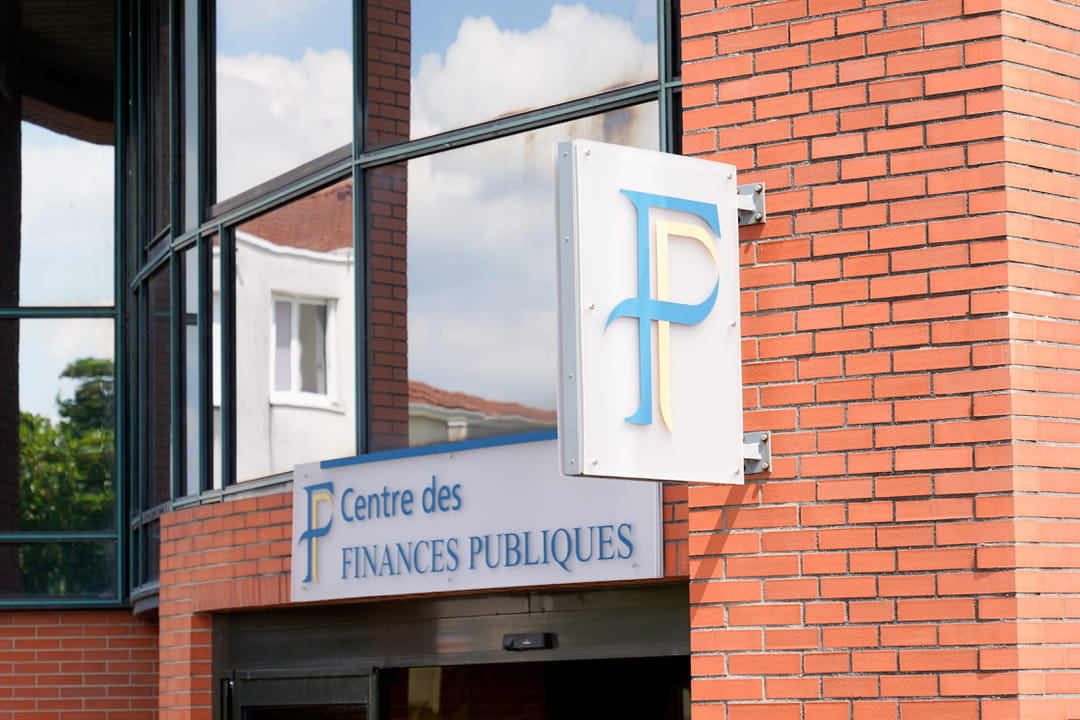
However, in 2003, the tax authorities contacted our taxpayer couple and it was a cold shower for them: they were subject to a tax adjustment. They owe more than 700,000 euros in taxes! A sum including the tax due, late payment interest and the surcharge. According to the General Directorate of Public Finances (DGFIP), the couple’s income tax declaration, made in 2000, was incorrect. The capital gains generated by the sale of their shares were not declared. And for good reason, these capital gains had not been mentioned in the IFU transmitted, at the time, by BNP Paribas.
In response, the couple took their bank to court to seek compensation for the damage suffered. Clearly, the taxpayers wanted the bank to reimburse them the amount of the tax adjustment, penalties and late payment interest. The couple notably criticized the banking establishment for a major failure to fulfill its tax information obligation.
Although BNP Paribas acknowledged its error in a letter dated September 11, 2003, the bank nevertheless considered that the taxpayers had not sufficiently verified their tax returns. The establishment also affirmed that clients could not be unaware of the existence of the transfer of shares in view of their amount and the resulting capital gains.
After a long legal procedure, the Paris High Court ended up dismissing the taxpayers’ requests on April 15, 2013, even ordering them to pay 2,000 euros to the bank for legal costs.
Considering themselves aggrieved, the taxpayer couple appealed the decision. The Paris Court of Appeal finally agreed with them. The magistrates considered that the banker, as a professional paid for this purpose, must deliver error-free documents in order to respect his tax information obligation towards his clients. The court recognized that the omission of information in an IFU constitutes a major fault and engages the contractual liability of the bank. The Court of Appeal therefore ordered BNP Paribas to pay the taxpayer couple the sum of 766,192.62 euros in compensation for the damage suffered, as well as 10,000 euros for legal costs incurred (article 700 of the Code of Civil Procedure).
Subsequently, the Court of Cassation rejected the appeals filed by BNP Paribas. The highest court in the country recalled an essential principle in a decision rendered on September 16, 2016: it is the banker who provides information on the IFU intended for the tax administration. It is therefore the responsibility of this professional to correctly complete this formality and not of the declarant to verify the information communicated by the bank which he must report on his income declaration.