








Colibri, a French horticultural group, has just launched a new low-cost garden center concept. Objective: sell plants 20% less expensive than its direct competitors and 50% less expensive than traditional garden centers.
“Today, if you want a beautiful garden, you have to be rich.” This is the observation made by Pascal Griot, president of the Colibri group. Founder and director of the Promesse de Fleurs garden center, he is launching a new discount garden center concept. “The objective is to have a good product at least 20% cheaper than the closest competitor on the web and to have at least a 50% price difference compared to the garden center,” summarizes Pascal Griot.
It is online that this model takes shape. On the site, the fleur de lis is sold for 58 euro cents each, the hydrangea bucket for 3.71 euros, and pink lavender for 1.06 euros. For comparison, the Gariguette strawberry plant is sold at 1.03 euros per unit, while elsewhere it is sold at 1.50 euros. The cost of delivery amounted to 4.94 euros during our simulations.
Behind these slashed prices, a platform: Florprice. To offer such low prices, Pascal Griot draws a parallel between Florprice and the giant Action: “We make the conscious choice of a restricted range: we do not claim to have everything the gardener is looking for, but we will only find products here at the fairest price. Like Action, we start from supply, not demand: if we are not able to keep our promise on a product, we do not list it. This is why you will not find an olive tree at us.”
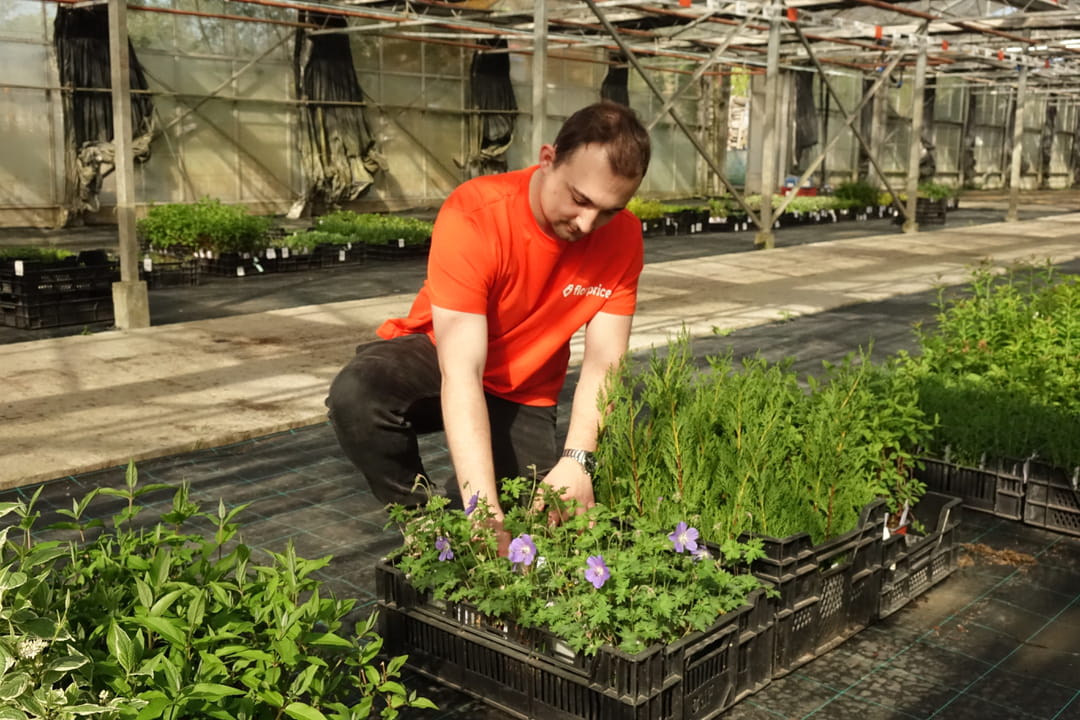
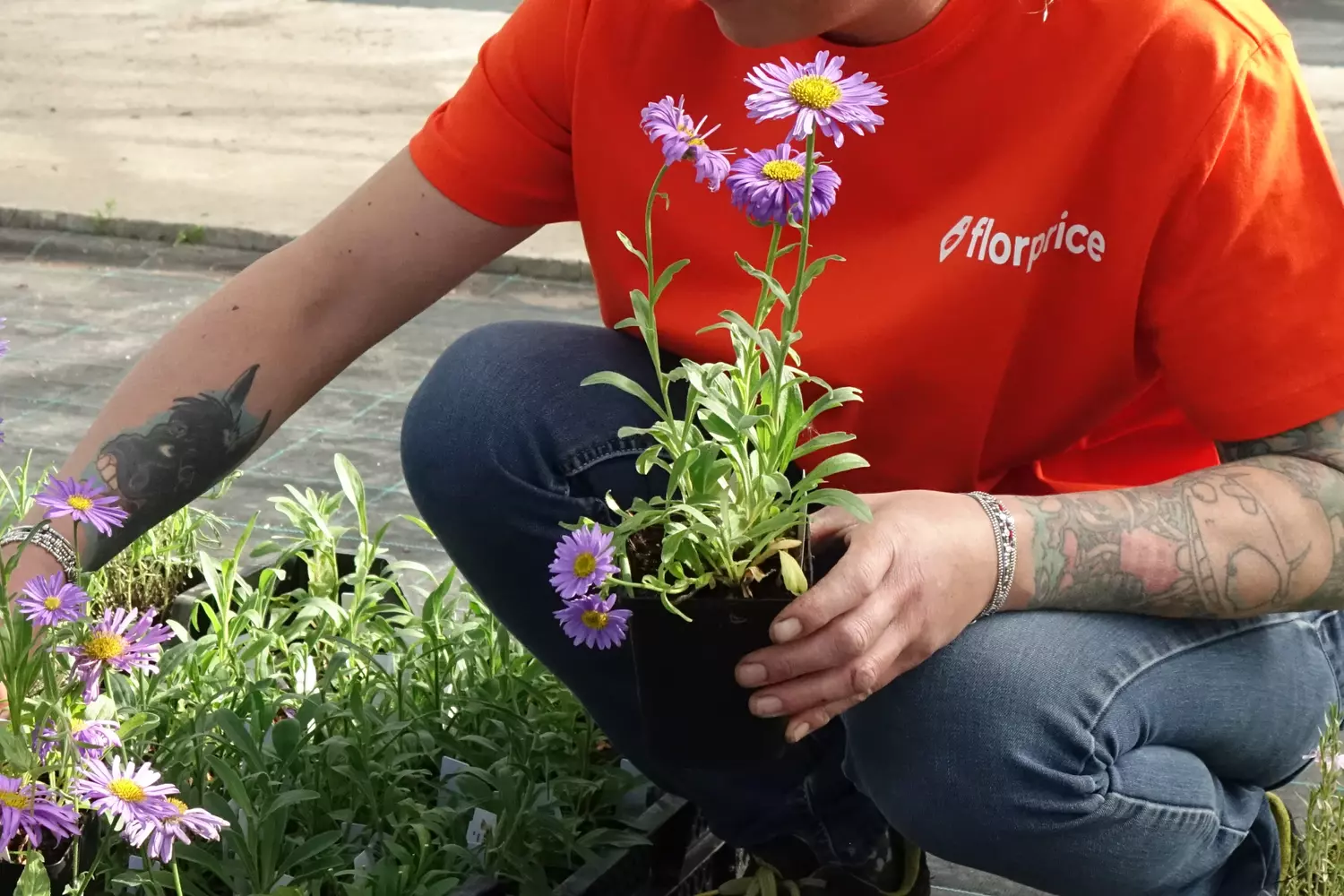
To limit costs and sell less expensively, Florprice focuses on small formats and young shoots. Almost the entire range is available in 0.6 liter buckets, a lightweight format, therefore economical to transport. “This format is paradoxically the guarantee of better quality,” adds Pascal Griot: in plants, the younger the plant, the better it recovers.” Another essential lever to contain prices: 60% of the plants are produced internally, the rest mainly coming from Anjou, Belgium and the Netherlands.
“Simplicity” and “efficiency”. These two words come back repeatedly in Pascal Griot’s mouth when he describes Florprice. “It’s not a service site,” he says. “On the group’s other brands, we offer telephone advice, advice by email, very strong editorial added values. On Florprice, we don’t have that and we don’t want it.” The offer is deliberately kept simple: the categories are organized by uses rather than by botanical families, to facilitate access.
A model that has been germinating for at least ten years in Pascal Griot’s head. “We did it when we felt sufficiently solid and dominant in the market,” he continues, “to move on to this phase of industrialization.”
A platform was born while the prices of plants in traditional garden centers have only increased, according to Pascal Griot. “Garden centers have entered a form of vicious circle: improved service, rising prices, falling volumes.” Florprice therefore seeks to break this logic with much lower prices.


