








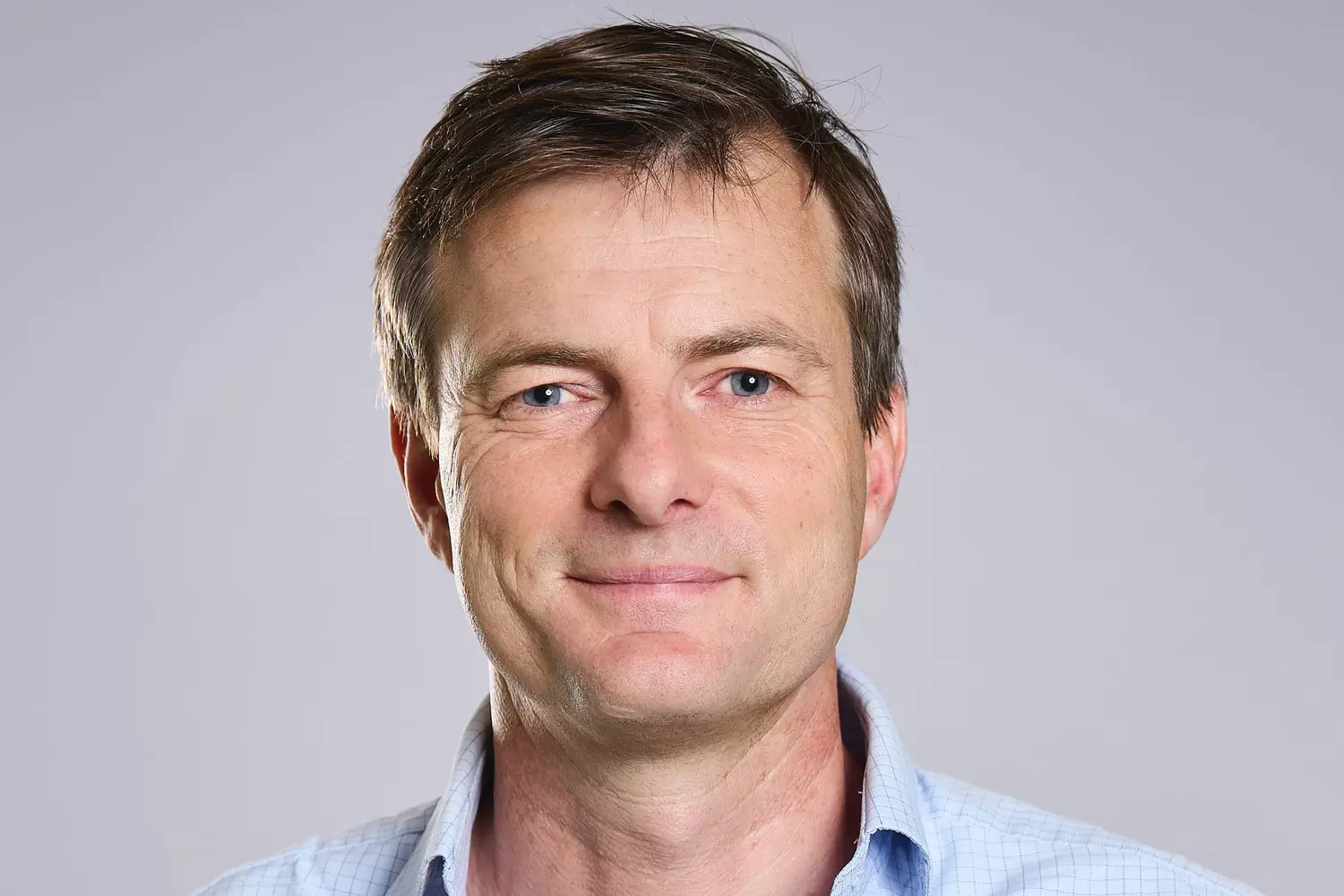
Nat Ives is Director France, Benelux and Nordics at Nvidia. On the occasion of VivaTech, he looks back on the group’s global strategy and its ambitions in France.
JDN. What real place does France occupy in the European strategy of Nvidia : commercial market, R&D hub, political showcase, or future industrial center of AI?
Nat Ives. Few people know this, but our very first chip, the NV1, was manufactured in France. Today we are around 150 people, with an office in La Défense and teams spread across the country. It’s a real mix: salespeople, developers, engineers, marketing. Each function of the company is present in France. My role consists of leading the AI ecosystem in the regions for which I am responsible, and France occupies a decisive place in it.
Large start-ups are in Paris: MistralH Company, Pleias, AMI Labs… The concentration of talent and innovation there is remarkable. At the same time, research is very active, with the CNRS in particular. France perfectly illustrates the richness of a complete ecosystem brought together in a single country, and that is very valuable for us.
Today, the limit of AI is no longer just the GPU, but access to electricity, land, cooling and networking. Does France really have the physical means to host large-scale AI factories? ?
Building the next generation of AI data centers is an extremely complex task. The problem is difficult because the supply chain is so long: from land and energy, to concrete and buildings, then to the cooling and power distribution that you mention, to the density and complexity of the equipment in the rack, before even getting to the software. We developed a tool called DSX, a sort of virtual data center twin where all of these elements, and all the companies that make and assemble them, can interact. Many of the players in our DSX system are French, like Schneider. There is also Hutchinson, on piping and cooling systems, and TotalEnergies, very active on batteries and energy supply. Let us also cite STMicroelectronics, present on chips and controllers, or Eclairion, which built the first high-density data center for Mistral in Bruyères-le-Châtel.
So yes, France has everything it needs to deploy these AI factories: the players have understood that France is one of the most attractive places to do so, for all the reasons I have just mentioned.
Which French sectors are the most advanced in their use of AI?
The media adopted it very quickly, because the data is not very sensitive and the activity is not very regulated, and because the tools ofGenerative AIalready used by consumers, were particularly relevant to them. Companies like Publicis, or L’Oréal in digital marketing, launched very quickly. Conversely, in more sensitive sectors such as health, defense or the public sector, the obstacles to adoption are more numerous.
With Nemotron, you are positioning yourself more and more on the software part of AI. What is your strategy with this family of models?
We are now the world’s largest contributor to open source AI. Nemotron is our family of generative AI tools and models, distributed as open source. Earlier this year, we announced the Nemotron Coalition: an alliance with the world’s top laboratories working with us on training the next generation of Nemotron models. I’m happy to say that H Company and Mistral are both part of it. They bring their own skills, their data sets and their European vision of the world. Nemotron has already been adopted as a base model for the post-training of fundamental models, by many French companies and start-ups.
We are seeing more and more cloud providers offering chips dedicated to inference and training (Google, AWS, etc.) Is this a positioning that you also intend to follow ?
Yes, and in fact we already do. Just look at the work we’ve done with Groq and the announcements that came with it. This is precisely what they aim for. It all depends on the model and its use. Do you want a simple model, capable of answering many questions very quickly for a large number of users, or a very intelligent model, capable of rich dialogue? These are two very different cases of inference, with quite a spectrum in between.
The challenge is to optimize the speed of token production, but also the number of tokens per watt, therefore energy efficiency and, consequently, cost efficiency. There are a range of ways to achieve this, and we are constantly looking to optimize our portfolio in this way. Because at the end of the day, these tokens have a value, which can be measured in euros: more tokens per watt and more tokens per user, that’s more euros and more value generated. We strive to do this as efficiently as possible.
Jensen Huang is increasingly emphasizing robotics and physical AI. What is the real maturity of the French market on this subject?t ?
When we talk about physical AI, that is to say AI that touches the physical world, certain areas are already seeing strong adoption: smart cities and computer vision. On production lines, for example, AI monitors the quality of what comes out without physically interacting with the parts, or it sorts, as in recycling. We also find it in smart cities or security. But AI is starting to interact physically, and robotics is the first area concerned with really strong start-ups.
Capgemini is, for example, working on humanoid robots for Orano, in the nuclear sector, in order to intervene in environments dangerous to humans. And they’re not the only ones. Enchanted Tools also works on robotics. On the automotive side, we are looking at autonomous driving and robotics for production lines. We are talking with other companies, such as Michelin on robotics, and these are only the beginning.