









A first version coded in an hour, then an AI agent that went viral: in six months, Peter Steinberger went from anonymous developer to pilot of new generation agents at OpenAI.
JDN. How did you originally come up with the idea to create OpenClaw? How long did initial development take?
Peter Steinberger. I launched into agentic engineering in April 2025, and from May I wanted to be able to contact my agent remotely. I built a first version, a terminal accessible on the web and on mobile, but the use remained unnatural on a phone. I gave up, convinced that the big laboratories would quickly offer this type of tool. The need reappeared around November. Since no actor had developed anything, I did it myself.
The first functional version, on Codex, was built in one hour. But an hour is never really an hour: adding image support took several hours. The tool proved useful enough that I continued to refine it until I had a satisfactory experience. The result quickly became astonishing, driven by a favorable context: the models reached an excellent level in programming. But programming is above all about problem solving, a skill that is transposed to many other uses. The agent is given a task, and he solves it. It’s the equivalent of giving him access to his workstation, and overnight I had this ability directly on WhatsApp.
How do you explain the immediate success of OpenClaw?
Peter Steinberger. Until then, AI agents remained confined to the terminal, an off-putting environment for many users. OpenClaw made the experience more accessible and more natural, and that’s what triggered the famous magic moment: these users gave the agent a task with doubts that it would succeed, and it succeeded. This first successful attempt causes a “wow” effect.
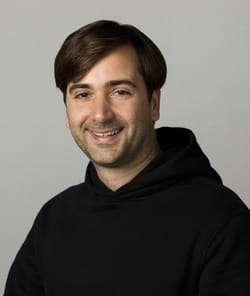
Thibault Sottiaux. Peter is a builder and a visionary: he goes where others think they cannot go, with tenacity and the ability to think big. Added to this was good timing, with models becoming efficient enough for a project that seemed out of reach to come to life. There was also this construction in public, within open source: Peter developed the tool while showing it in real time, people were with him on Discord. This is the beauty of open source: we exchange ideas and reintegrate them into our core agent.
While developing OpenClaw, what did you learn concretely about how agentic loops work?
Peter Steinberger. The agentic loop is actually very simple, almost the “hello world” of an agent. Creating the loop is simple, but making it truly efficient becomes infinitely complex. Computer use is a good example: you can say to the agent “take over and finish this”, and he moves the mouse and clicks for you. Very useful, but very difficult to build.
You started OpenClaw, then joined OpenAI. Why OpenAI in particular?
Peter Steinberger. When the project exploded, I didn’t ask myself if I should make a business out of it. I had just spent several years running my own company and didn’t want to start again. Above all, starting a company would have risked weakening open source, due to a conflict of interest. The alternative was to join a lab, which I was always curious about. OpenAI allowed me to place OpenClaw in a non-profit foundation: I can thus carry out two activities at the same time. Staying independent gives users a choice, and it’s nice that OpenAI lets me continue developing it, including supporting other models.
I therefore divide my time between OpenClaw and more ambitious projects at OpenAI. It’s even more exciting today: we’ve put a lot of effort into making it enterprise-ready. OpenClaw is used standalone, on top of Codex or Copilot, the harness itself having become a plugin.
Can businesses also use OpenClaw agents? For what use cases?
Thibault Sottiaux. We are supporting them and starting to officially support it in our business offer. OpenClaw runs very well on top of OpenAI models, at the cost of considerable work. Early ideas like memory or heartbeats became native implementations in Codex, which feeds our general agent, deployed everywhere at OpenAI and soon in ChatGPT. The circle is complete: Codex inspired OpenClaw, which in turn inspired Codex. We are now making it accessible well beyond developers.
How do you see the future of personal agents? Will each have its own agent, with its own context?
Thibault Sottiaux. This is exactly what we are building. We believe that everyone will have a personal, deeply individualized AGI: it understands your routine, your preferences and your long-term goals, and becomes useful in your private life as well as at work. From then on, your relationship with other applications changes radically. OpenAI is also a pioneer in multimodality: interacting in natural language rather than on the keyboard, with a state-of-the-art image generation model. All this converges towards a very natural experience, which even frees us from the computer.
Anthropic tells us that running agentic systems 24 hours a day is a goal to achieve in the coming months. Is this also a goal for your team?
“An agent can work for days, weeks, I even saw one working for a month”
Thibault Sottiaux. Our goal is not to rotate agents all the time, but to create value in the most efficient way possible. The real question is that of return on investment: accomplishing excellent work at the lowest cost. That said, many use cases justify a continuously active assistant, and our models, from GPT-5, 5.2, 5.4 and 5.5, are known to excel on long-term tasks. We actually delivered the /goal command, one of my favorite features: you set a goal, and the agent can work for days. For us, this is no longer a milestone to reach, it is already a reality: with Codex, an agent can run for days, weeks, I have even seen one working for a month. But duration is not the goal; the goal is to carry out remarkable tasks at the right cost.
Some AI researchers believe that the harness around the model represents the majority of an agent’s intelligence? Do you agree with this?
Peter Steinberger. The best harness is worthless with a weak model, and the best model remains ineffective without good action capabilities. This is the whole point of Codex: it is optimized for GPT models, and development advances hand in hand, the model knowing Codex and vice versa.
Thibault Sottiaux. Good models call for simplicity and fewer constraints. Harnesses used to be more complex, as it required a lot of guiding for a model unable to handle a wide range of tools without getting lost. This complexity was removed model after model, as it was found that certain constraints no longer helped the agent. In this quest for generality, the more the capabilities progress, the more the harness becomes simplified. We have also worked directly with the model engineers, side by side since the beginning of Codex. This is what made the project magical: we co-design both the models and the application, and the harness itself is built jointly by research, engineering and product.
What is the next logical step for Codex and OpenClaw? Should we expect a merger in the coming months?
“ChatGPT will soon be able to do much more”
Peter Steinberger. No way. The idea is rather to take the best ideas from OpenClaw to integrate them into Codex, and vice versa.
So are you planning to add an OpenClaw module to ChatGPT?
Thibault Sottiaux. That’s not our angle. Our thinking is how to take the best of existing agentic capabilities, whether from OpenClaw or Codex, and bring it to everyone in ChatGPT, to make it widely accessible. It’s all about capabilities, what the user can accomplish. And we want a simple and pleasant system, never confusing: the ChatGPT you already know, capable of doing much more.