








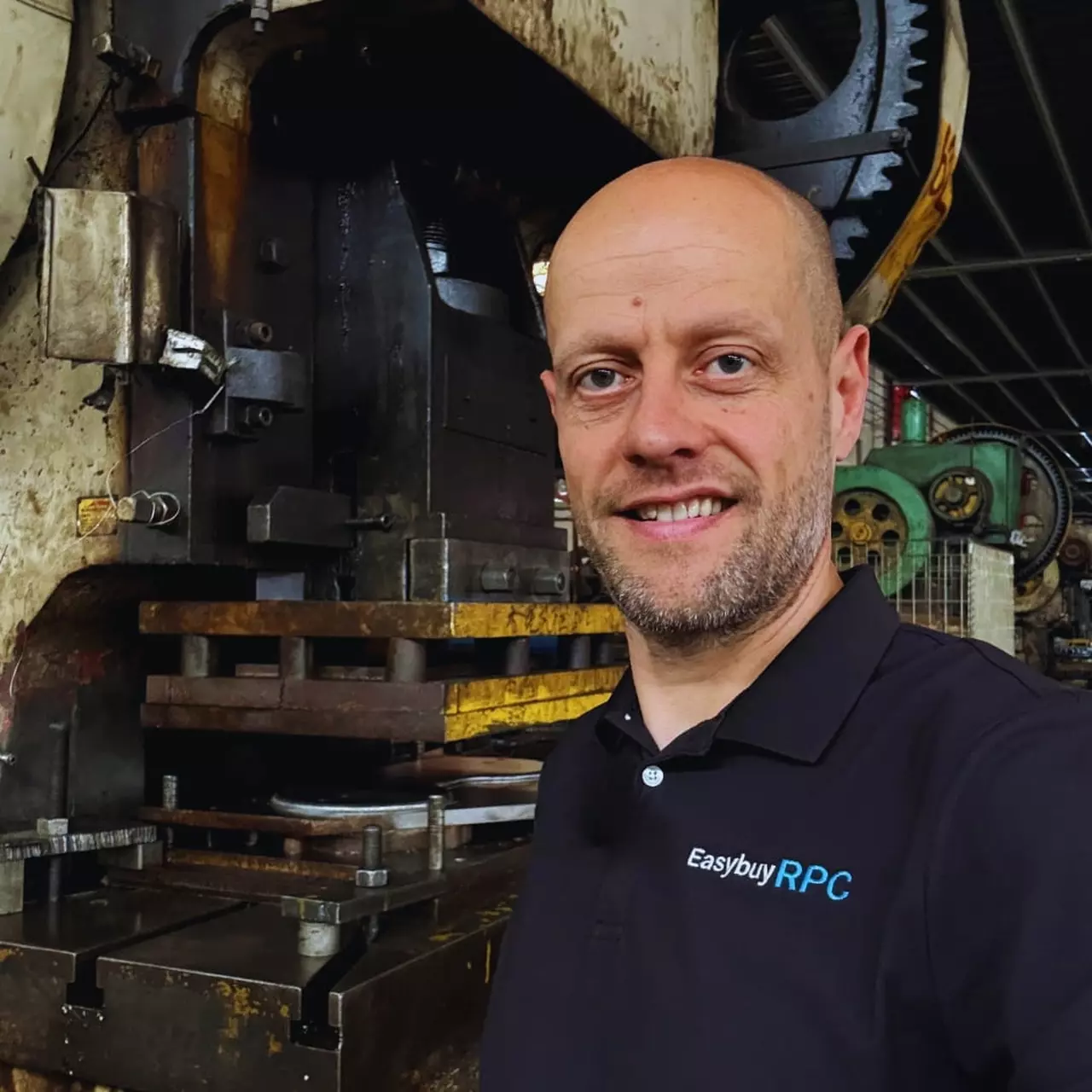
After 11 years in Chinese factories, I understood that what French managers take for a fault is often a different business culture.
The French leader often has a precise image of the Chinese factory boss. Opportunistic. Ready to cut corners on quality as soon as our backs are turned. Who says yes to everything, then does what he wants. Who changes their prices to grab a few margin points.
Eleven years in the Guangdong workshops showed me almost the opposite of what most people believe.
I’m not saying everything is perfect. There are bad actors Chinalike everywhere. But the image that the majority of French industrialists have of these bosses is false, and this error costs them dearly. Because it prevents them from working with people who are often more competent, more responsive and more reliable than they imagine.
Here’s what I learned.
The moving price is not a scam
This is a situation I see all the time.
A Chinese supplier gives a price. The customer validates. Then, when placing the order, the price changed slightly. Variation in the price of raw materialadjusted production stage, process different from what was initially planned.
The French reflex is immediate: someone is trying to scam me.
In reality, it is often the opposite. The Chinese boss is passing on a real cost that has changed. In an industry where raw materials constantly fluctuate, setting a final price months in advance makes no sense to him. He adapts to reality, and he considers it normal that you understand this logic.
Where French industry seeks to fix a price in a contract, it reasons in flux, in constant adaptation. This is not dishonesty. It’s another price culture, much closer to the field.
Flexibility is their true strength
This is probably what impresses me the most after all these years.
When a Chinese boss detects a problem during production, he doesn’t stop. He immediately looks for a solution. He works around, he adjusts, he finds a way to keep the deal. The resolution comes before the procedure.
In France, the same problem often triggers the opposite: we stop, we document, we wait for validation, we protect ourselves. The project slows down at the first obstacle.
In China, the obstacle is treated as a normal thing to resolve, not as a reason to block. This capacity for permanent adaptation is a real asset, provided you know how to read it. Seen from France, it can pass for improvisation. On the ground, this is formidable efficiency.
The relationship comes before the business
The first time a factory boss sees you, you haven’t signed anything yet. Often you haven’t even placed an order. You simply came to visit.
And yet, there is tea, fruit, lunch. We take the time. We talk about your work, your career, your project, before even talking about business.
I have seen bosses spontaneously share their contacts in other areas, without expecting anything in return. I saw one recommended competitor because they were overwhelmed and didn’t want to do your project badly. These are gestures that a French leader, accustomed to more transactional business relationships, does not expect to receive.
This generosity is not naive. It builds the relationship. In China, trust precedes the contract. The boss wants to know who you are first. Once this is established, many things become possible.
You never talk to the right person
This is the most important point, and the one that almost no one understands.
A French manager is looking for a supplier from his office. He goes to a platform. He comes across someone who introduces himself as “manager”, a reassuring title. He starts a discussion, receives vague answers, an exchange that leads nowhere. And he concludes that this supplier is bad.
He is almost always wrong.
The person opposite him is often at the bottom of the chain. She filters incoming requests, but she doesn’t know the product in depth. And above all, she does not dare report the project to the engineer or boss above until she is certain that it is serious and real.
You have to understand the reality of these people: they receive dozens of requests from all over the world, every day. They can’t bring everything up. So they sort. And as long as your project has not shown that it is concrete, you remain stuck at this first level, without ever reaching the people who matter.
Because these people exist. The real bosses, the real Chinese engineers almost always come from the profession they do. They have years of experience, deep technical knowledge of what they make. But it is not their role to respond to the first contact that comes on a platform. They only appear when the project becomes credible, or when someone there goes to look for them directly.
The real problem is not China. It’s the distance.
When a French manufacturer has a bad experience with a Chinese supplier, he draws a conclusion about China as a whole. Poor quality, poor communication, unreliability.
But more often than not, he never met the right people. He judged a country, an industry and people through the screen of a platform, from an office 9,000 kilometers away.
Everything is different there. The bosses I have worked with for eleven years are competent, responsive, and often surprisingly generous. Their way of doing business is not ours, and that is precisely what is confusing. What the French leader reads as a fault is often a simple difference in culture that he has never taken the time to understand.
In a previous column, I explained that the Chinese factory is not blocking out of bad faith, but because it did not understand what you wanted. It’s the same idea, seen from another angle. The barrier is almost never what you think it is.
Industrial China is not a risk to manage. It’s a world to understand. And those who take this time discover partners that others will never reach.
Nicolas Allard, founder of EasybuyRPC and field agent in China for 11 years, supports SMEs French, Belgian and Swiss in their import operations.