








The Programmatic Open Web Barometer, published by the Digital Alliance on Tuesday July 7, confirms that advertisers are deserting instream on the programmatic open web.
The collapse of advertising investments and the value of impressions on the open web in programmatic is dizzying this first half of 2026 in France. Of its three main levers, namely display, instream video and audio, only the latter is doing well with investments increasing by 23% and CPMs valued by +13% this first half compared to the first half of 2025, according to the “Open Web Programmatic Barometer”, published by the Digital Alliance on Tuesday July 7.
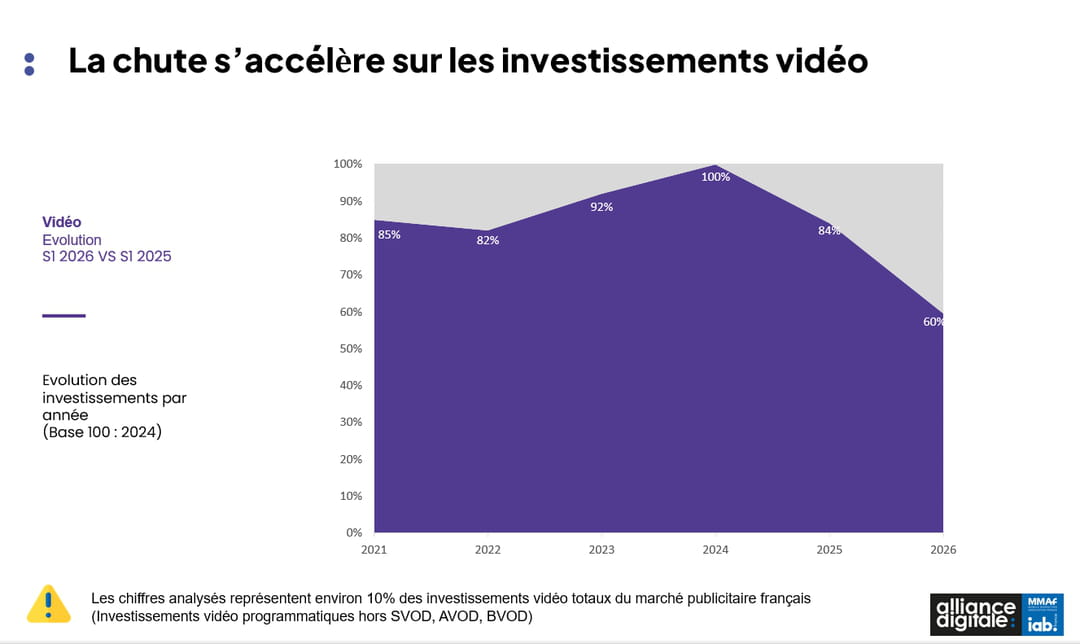
Display, which accounts for 70% of programmatic advertising budgets on the open web, saw its investments decline by 13% and the average value of its impressions drop by 4%. As for video, which accounts for 18%, the findings are dramatic: CPMs down 44% and investments down 30.6%. This is unheard of.
These reductions concern thousands of open internet sites and applications, monetized by around a hundred agencies, including around forty larger ones. Excluded from this scope are social platforms, video-on-demand services and streaming platforms and digital properties of TV channels. On video, this is equivalent to around 10% of the French advertising market’s total investments in this format.
Although spectacular, the decline in investments and the melting value of instream video inventories are not surprising. They were already significant in 2025, respectively -15.6% and -19.5%. “We are continuing a decline which is strongly driven by competition from video streaming platforms, digital offers from TV channels and social networks, particularly Instagram,” declares Arthur Millet, general director of the Digital Alliance. Concretely, advertisers who have budgets to invest in digital video no longer use the programmatic open web very rarely to buy instream.
What then should we think of the display which generates the bulk of this market: is it also a lever condemned to decrease infinitely? Not quite according to our interlocutor. “The Open RTB display market is very liquid, it responds to volume and performance tactics. It is therefore extremely sensitive to the economic and volatile situation. As soon as the macro signals are more positive or new players such as Temu arrive in Europe seeking to build a market share, Open RTB display will benefit from it”, analyzes Arthur Millet.
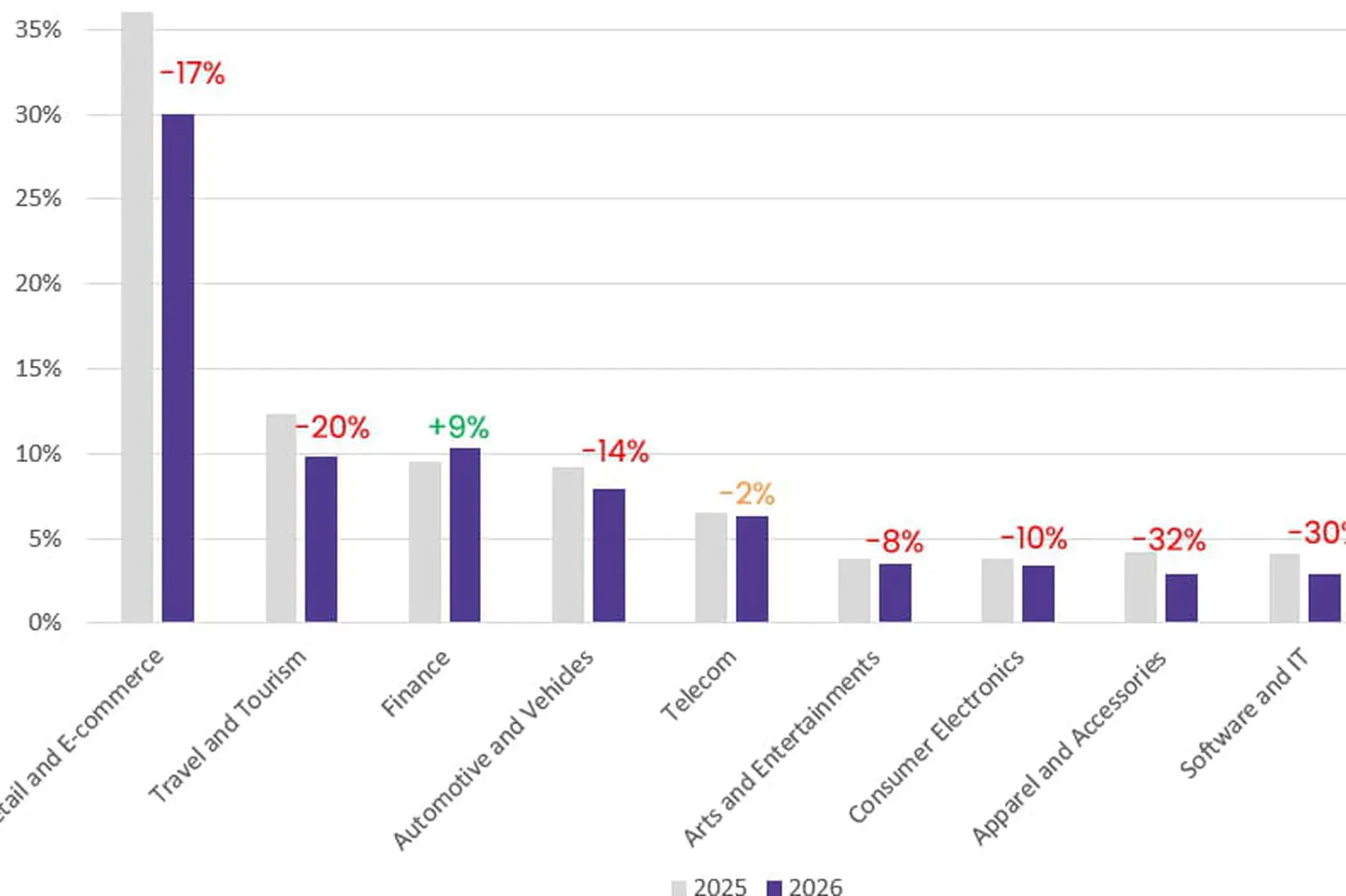
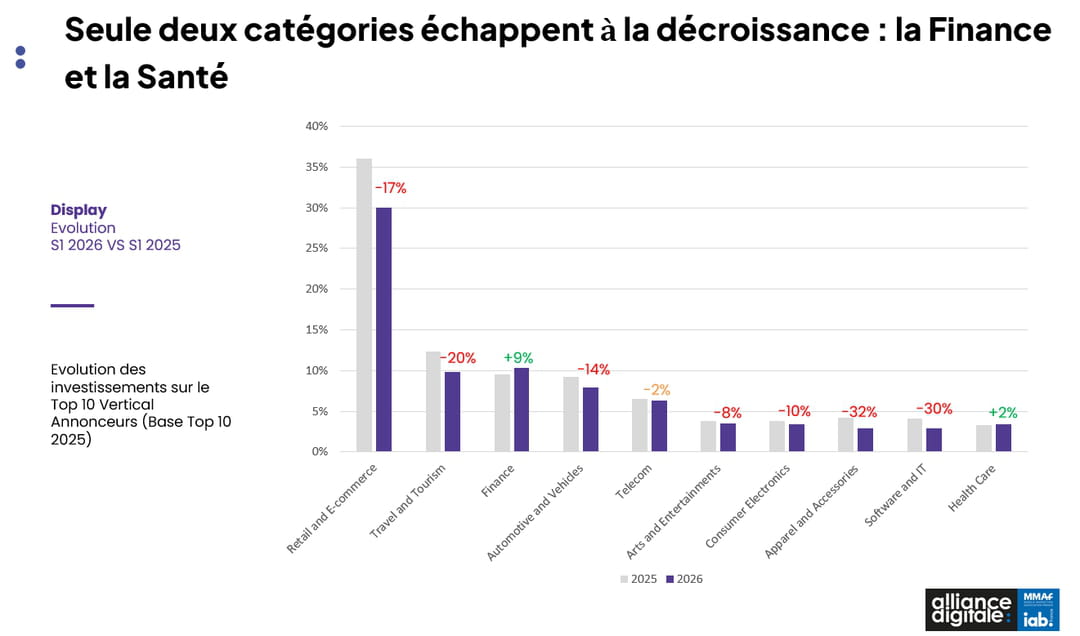
Temu, which invested heavily in the open web in 2025, halved its display budget in the first half of 2026. Alphabet, Google’s parent company, cut them by 74%. In the top 10 sectors of advertisers investing in display, only the finance and health categories have escaped the decline.
Note that on display, today made up of 71% of investments on mobile, the formats which hold up the best are interstitials and “native ads”. The latter have even achieved the feat of capturing investments up 39% on mobile.
In terms of purchasing methods, for the first time in a long time, we are seeing the breakthrough of curated marketplaces which accounted for 80% of the growth in deals. The latter increased by 7% in the first half of the year, but remain a very large minority.


