








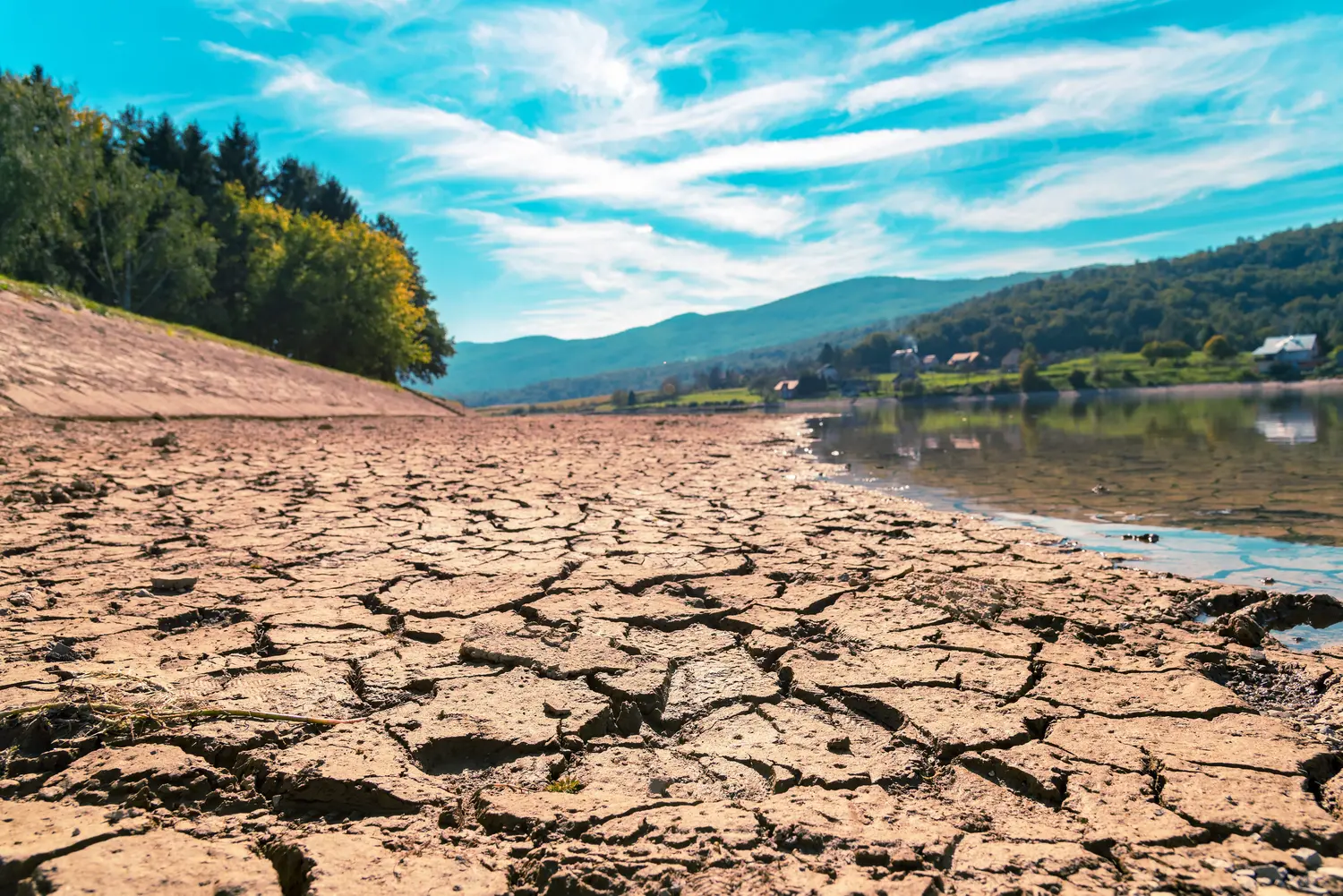
The HCC annual report highlights the acceleration of warming, the inadequacy of current policies and the need for a collective surge and increased investments.
“France is not ready to face the impacts of climate change.” This is the observation drawn up by the High Council for the Climate (HCC) in its eighth annual report, published this Thursday, July 9, 2026. The body responsible for evaluating France’s climate policies warns of the inadequacy of the country’s preparation as the effects of warming accelerate and intensify. This report comes as France is experiencing a succession of heat waves and rare drought conditions conducive to fires, illustrating the “tragic period” mentioned by Jean-François Soussana, president of the HCC, during a press conference.
An acceleration of warming in France
The HCC records the “record rate of global warming”, which reaches 1.4°C compared to the pre-industrial period (1850-1900). Exceeding 1.5°C of warming within a few years is “now inevitable”, recalled climatologist Valérie Masson-Delmotte, member of the HCC. In mainland France, warming has already reached 2.2°C, or even 2.9°C in summer. “We are entering a dangerous zone, in particular because temperatures exceeding 40°C, extremely rare in the 20th century, now affect a large area of France and will occur more and more frequently in 2025 and 2026,” notes the scientist. The report highlights that “until global CO2 emissions reach net zero, the climate will continue to warm and heatwaves will intensify.”
The rate of decline in greenhouse gas emissions in France stalled in 2025, with a decrease of only 2.1% compared to 2024. To comply with France’s third carbon budget (2024-2028), this rate must at least double to reach on average more than 4% per year in 2026, 2027 and 2028. The transport sector remains the leading contributor to territorial emissions. (34% of emissions). The HCC also notes that the forest carbon sink “has been significantly degraded under the effect” of climate change.
Public and private green investments have increased by 50% in ten years, but declined by 5% in 2024, while fossil investments remain stable (70 billion euros per year). The green fund was cut by 20% in the 2027 PLF, which limits the capacity of local authorities to implement priority adaptation actions. Aid for low-income households, such as MaPrimeRénov’, social leasing of electric vehicles or heat pumps, is today “largely undersized”. “Social justice is essential”, recalls Jean-François Soussana.
The HCC insists on the urgency of “changing the scale of adaptation action”, because our infrastructures and our activities have developed “in a climate which no longer exists”. The national adaptation plan launched last year anticipates France at 4°C by 2100, but the HCC recommends supplementing this trajectory with more “pessimistic” high-risk eventuality scenarios. The report underlines that the impacts of global warming are already violent and that France must strengthen its regulatory framework, particularly on dangerous housing in the event of extreme heat, and change town planning rules to better protect the population.
The HCC calls on France to “take its responsibilities to protect its population” and to adapt its policies to the new climate reality. He recommends multi-year budgetary planning for climate action, recalling that the cost of inaction would be much higher than that of the transition.


