









During an inheritance, the share of inheritance that each heir receives may be reduced due to certain social assistance. The State demands their reimbursement.
“My story is similar to the one that many families end up experiencing sooner or later, but the end on the other hand, I don’t wish it on anyone,” Fabrice confides to us, still consumed by bitterness. Aged 59, this resident of Arras has spent recent years taking care of his father. “After the death of my mother, my father’s health rapidly deteriorated and within 2 years he completely lost his autonomy,” he says.
An only son, Fabrice did the same thing as most families faced with this type of situation: he placed his father in an establishment for dependent elderly people (Ehpad). This private retirement home charges him 2,350 euros every month for accommodation and care. An amount that is certainly substantial, but which remains below the national average. According to Christine Hospital, director of Uni-Santé, a specialist in nursing home databases, “a place in a nursing home costs on average 2,418 euros per month: in the public sector the average rate is 2,143 euros per month, for associative structures it takes 2,335 euros on average, while private establishments display a rate of around 2,935 euros per month”.
“The problem is that we didn’t have the 2,350 euros that the nursing home demanded,” explains Fabrice, “My father, between his social assistance, his retirement pension and my mother’s survivor’s pension, barely received 1,800 euros per month and for my part I earned barely more than the minimum wage with a dependent child.” To pay for his father’s nursing home, Fabrice therefore submitted an application for social assistance for accommodation (ASH) to the Pas-de-Calais department. The ASH is used to pay the difference between the amount of accommodation costs and what the elderly person and their dependents, that is to say their children, can pay. This aid is calculated and paid by the department’s social assistance service.
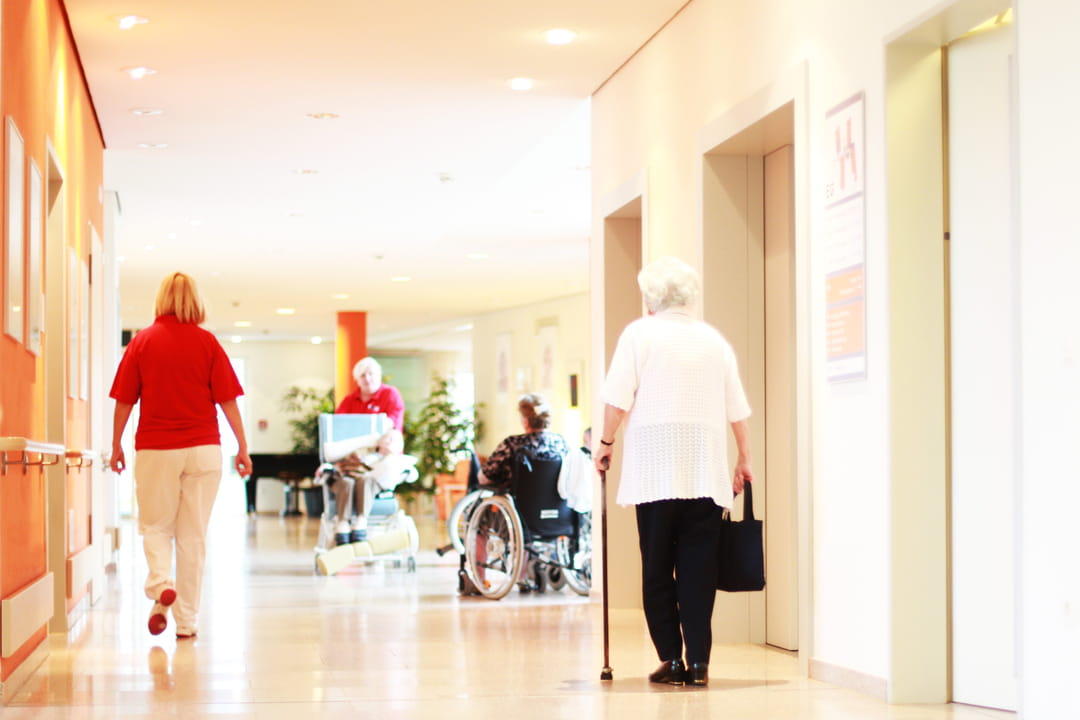
To obtain ASH, the elderly beneficiary must be over 65 years old, they must live in France and their income must be lower than the accommodation costs billed by the nursing home in which they live. In general, the department leaves around 100 euros per month to the ASH beneficiary. “So my father paid part of his nursing home, each month, to the tune of 1,700 euros, I paid 200 euros and the ASH allowed me to pay the remaining 450 euros,” explains Fabrice. His father spent 42 months, a little less than 4 years, in this nursing home before passing away. In total, the department therefore paid 18,900 euros of ASH to help pay the accommodation costs of Fabrice’s father.
“However, what I didn’t know when applying for ASH was that the department can demand reimbursement,” Fabrice painfully recalls. Indeed, the department’s services can carry out an asset and tax investigation into the resources of the applicant and/or beneficiary of the ASH. The law authorizes them in particular to examine the transfers of goods and money made by the new resident in a nursing home, during the 10 years preceding the ASH request, or after it. If there have indeed been donations of real estate or money, the department may consider that the elderly person has voluntarily destitute, thus reducing their ability to pay for their retirement home through their own means.
“However, a year before his arrival in a nursing home, my father made a donation of 30,000 euros to help me financially with my son,” says Fabrice, “and at that time we did not yet know that he was going to need a place in a retirement home.” One day, Fabrice received a letter from the department’s social assistance service, telling him that he would have to reimburse the ASH paid for his father. After several exchanges of letters and meetings with the departmental administration, Fabrice was able to negotiate not to immediately return the amount. “At that time, I couldn’t pay anyway,” he says.
Instead, the department offered Fabrice to reimburse the amounts linked to his father’s ASH by deducting directly from the estate. “After the death of my father, the department therefore recovered 18,900 euros from the inheritance that I received,” concludes Fabrice, still disappointed at having requested this aid which he now describes as “a trap”.


