








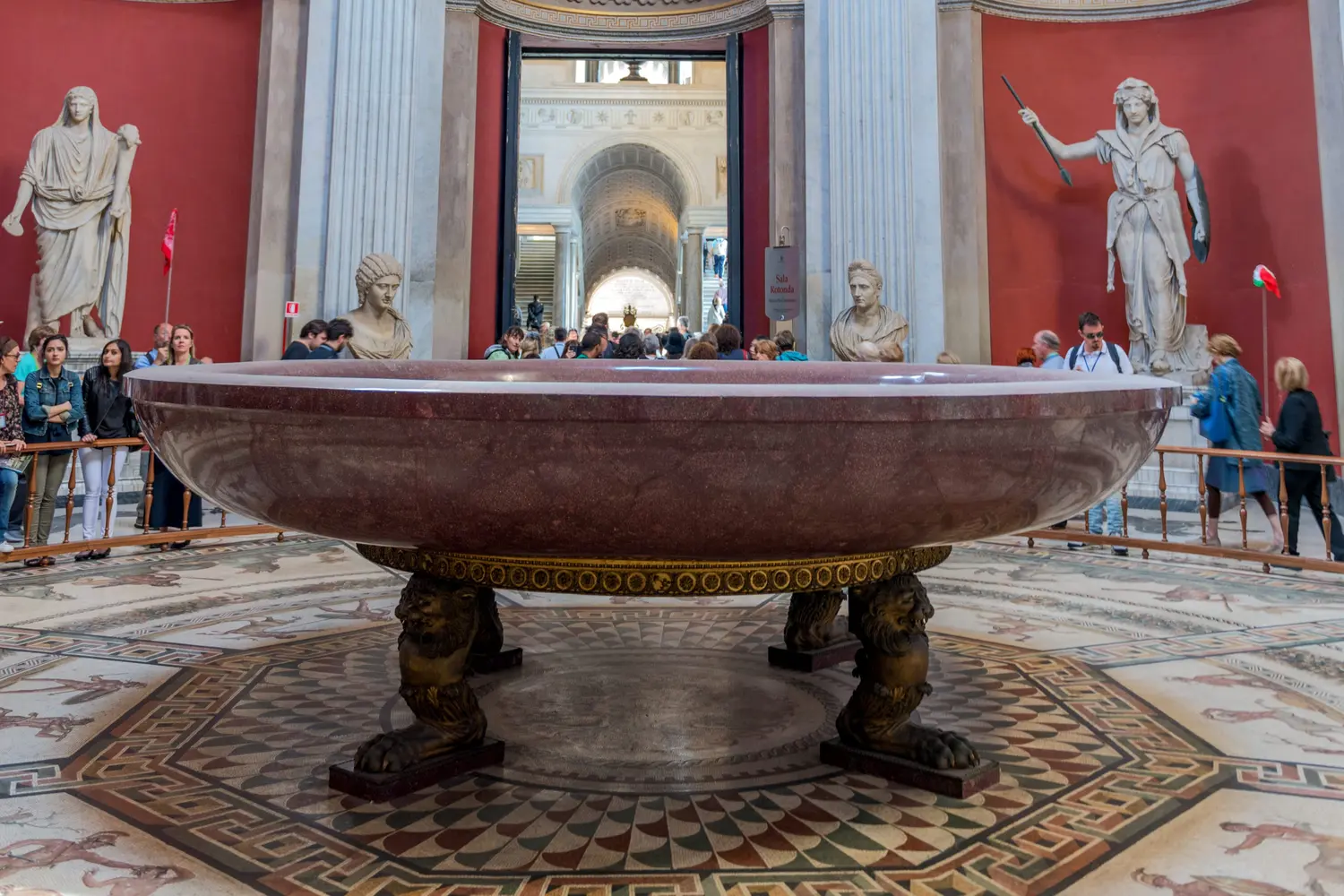
At the Vatican, a large vat intrigues visitors. It served as a bathtub for a Roman emperor.
In the Vatican Museums, among the ancient statues, there is a huge stone pool. Installed in the round room of the Pio-Clementino Museum, this tank is traditionally associated with Nero, Roman emperor who reigned from 54 to 68 AD, and who is infamous for his authoritarian power, his megalomania, and his persecution of Christians. He used it as a bathtub.
This bathtub is said to have been designed for the Domus Aurea, the “Golden House”, the extravagant palace that the emperor had built. Designed to impress, this residence extended over 50 hectares in the center of Rome, between the Palatine and the Esquiline. In this immense palace, rediscovered during the Renaissance, a monumental bathtub was not a simple practical object. She participated in the staging of the emperor’s power.
What makes this pool exceptional is first and foremost its material. It is cut from imperial porphyry, a purplish-red, speckled stone, the color of which directly evokes purple. In the Roman world, this hue was associated with prestige, rank and authority. Porphyry was therefore not only decorative: it spoke of the power of those who could afford it.
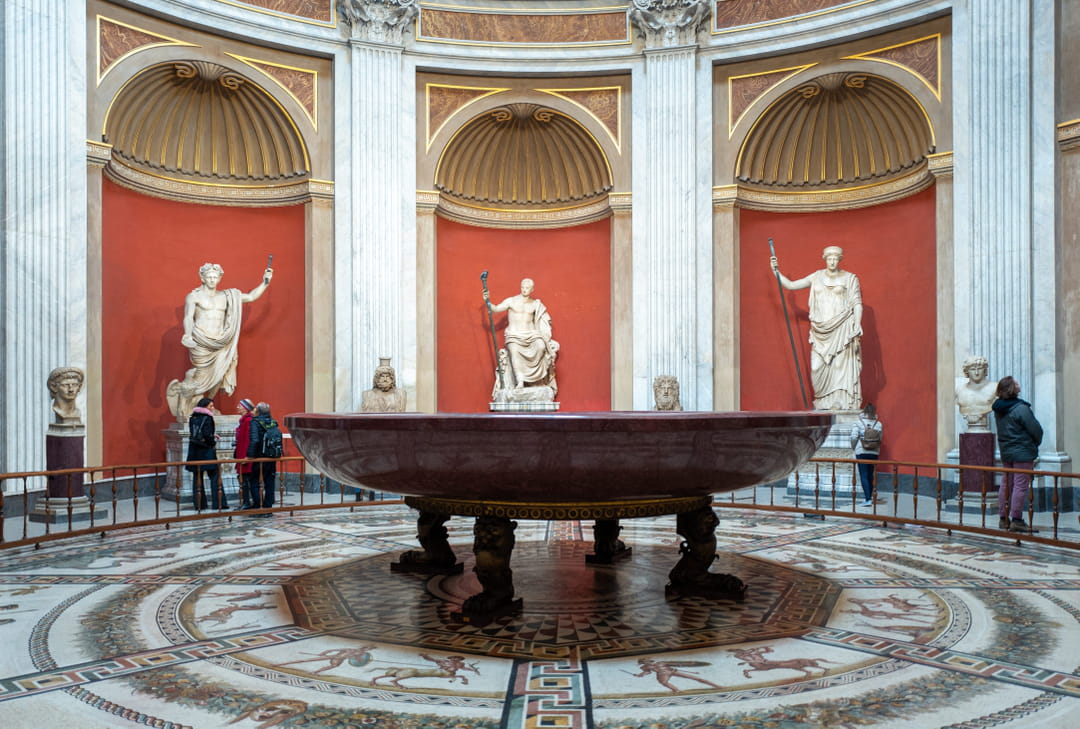
This stone was all the more precious because it came from a single place, the Mons Porphyrites, a quarry located in the eastern desert of Egypt, between the Nile and the Red Sea. To get to Rome, the blocks had to be extracted, transported overland, loaded on the Nile, crossed the Mediterranean, then transported to the capital. At the time, moving such a mass was almost a feat.
The difficulty did not stop at transportation. Porphyry is an extremely hard, dense and heavy rock. Carving it required remarkable technical mastery and hundreds of hours of work. In ancient times, possessing an object of this size in such a material proved that the Empire could mobilize men, tools, roads and ships to transform a rare stone into a political symbol.
Over the centuries, porphyry has become a marker of power. Emperors, popes and great European families searched for it, sometimes reusing ancient fragments. It evoked Rome, emperors and the idea of an almost sacred authority. Nero’s bathtub concentrates all of this in a single object.
Its supposed value, often presented around two billion dollars, must however be taken with caution. It has never been sold and its market price has therefore never been proven. But this estimate can be explained by an exceptional accumulation: its size, its rarity, its state of conservation, its almost impossible to find material and its imperial history.


