








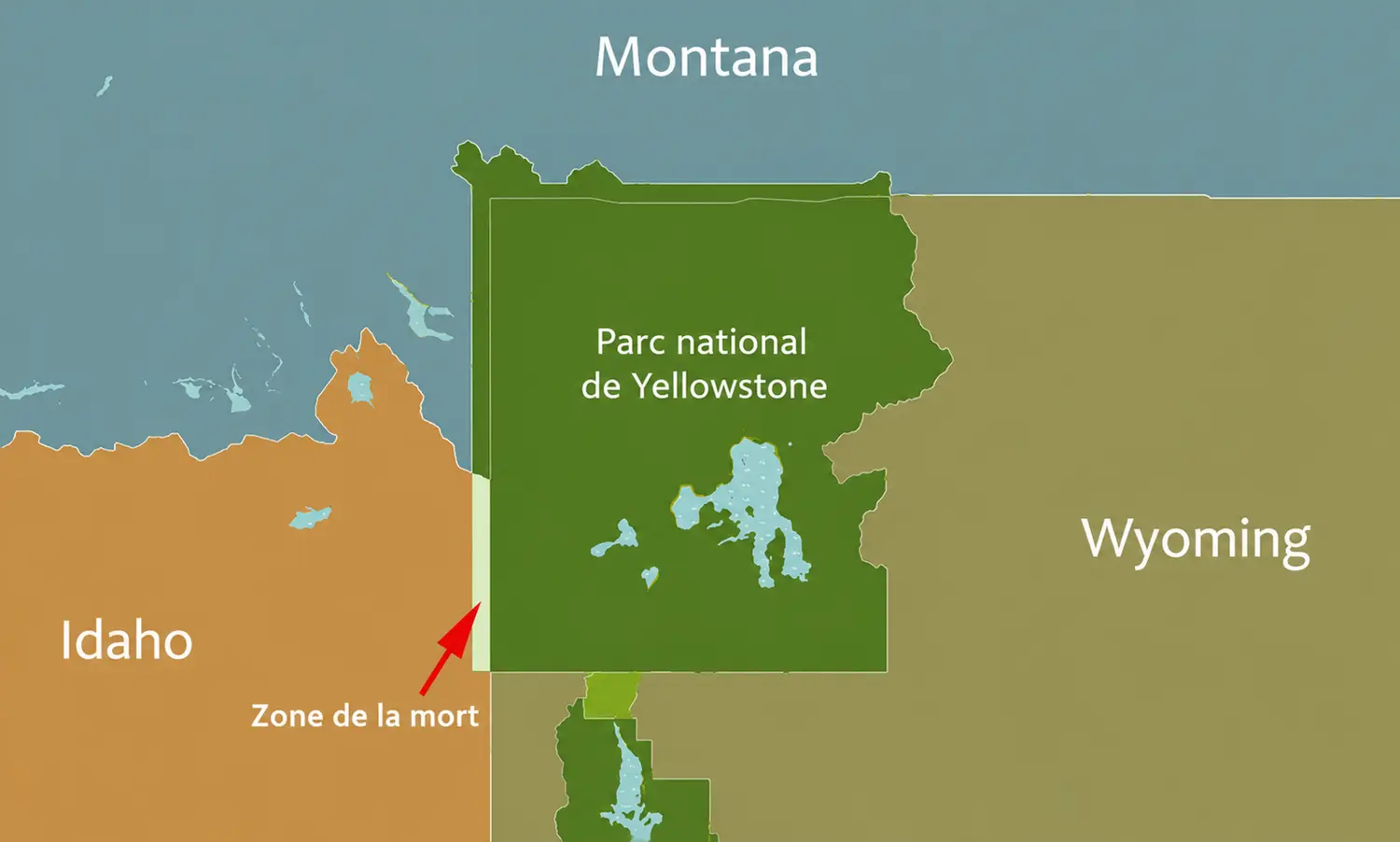
For twenty years, 130 square kilometers of wilderness have fascinated America. Here, a legal loophole could make a crime impossible to try.
“The Perfect Crime”. For an academic essay, this is an astonishing title to say the least. In 2005, Brian C. Kalt, professor at the University of Michigan, developed a theory that still fascinates specialists in American law today.
It takes root in one of the most emblematic regions of the United States: Yellowstone National Park, known for its impressive geysers. It is in this green setting that the jurist argues that a “forgotten constitutional provision, combined with an obscure law, allows well-informed people to commit crimes with complete impunity.”
Concretely, because of a poorly written law, in a small area of the park nicknamed the “death zone”, a criminal could kill someone and walk away free.
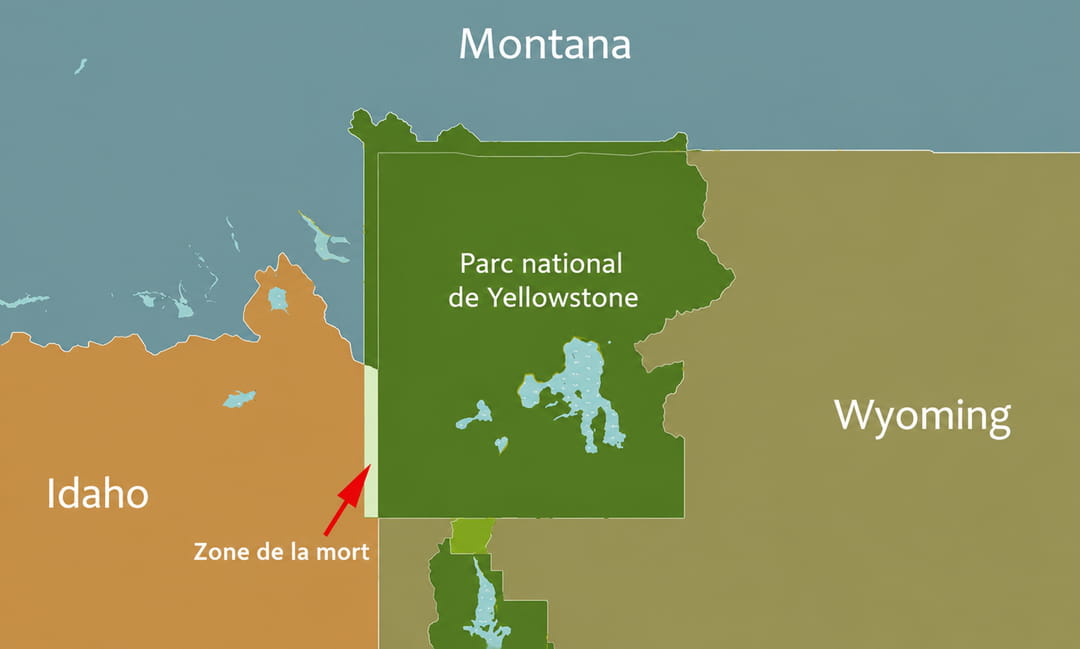
Before going into detail, it is necessary to understand an essential legal element in the United States: districts are sort of large legal provinces which are located in a state. And in a trial, a defendant has the right to be tried by a jury composed of residents residing in both the state and district where the crime was committed. This principle ensures that a trial takes place locally.
This is where the legal crux lies, because Yellowstone Park straddles the states of Montana, Idaho and Wyoming. And yet the government chose to include the entire park in Wyoming’s single judicial district. Thus, because of this particularity, the district of Wyoming is the only American district to extend over several states.
However, if an individual commits a murder in the Idaho portion of the park, the law requires that he be tried by a jury composed exclusively of people living in the District of Wyoming and Idaho. This restricts the pool of potential jurors to 130 square kilometers of wilderness. However, when this academic essay was written, no residents lived in this area of the park. No jury could therefore be composed there. The icing on the cake: if the accused refuses to be tried in another district, he must be released.
Removing the death zone “could be relatively simple,” says the University of Colorado. “It would be enough to redraw the boundaries of Wyoming’s judicial district.” But now, in a context of growing political tension in Uncle Sam’s country, the redistribution of districts is difficult to imagine. Additionally, “because it is extremely unlikely that a serious crime will be committed in this part of the national park, most Americans are not concerned about the ‘death zone.’
The fact remains that, even if the trial cannot take place, this legal vacuum does not prevent any action by the State. Federal agents could still investigate and arrest the suspect. The theoretical difficulty appears later, at the jury trial stage. For now, this theory has fortunately never been tested. No murders were committed in the death zone.


