








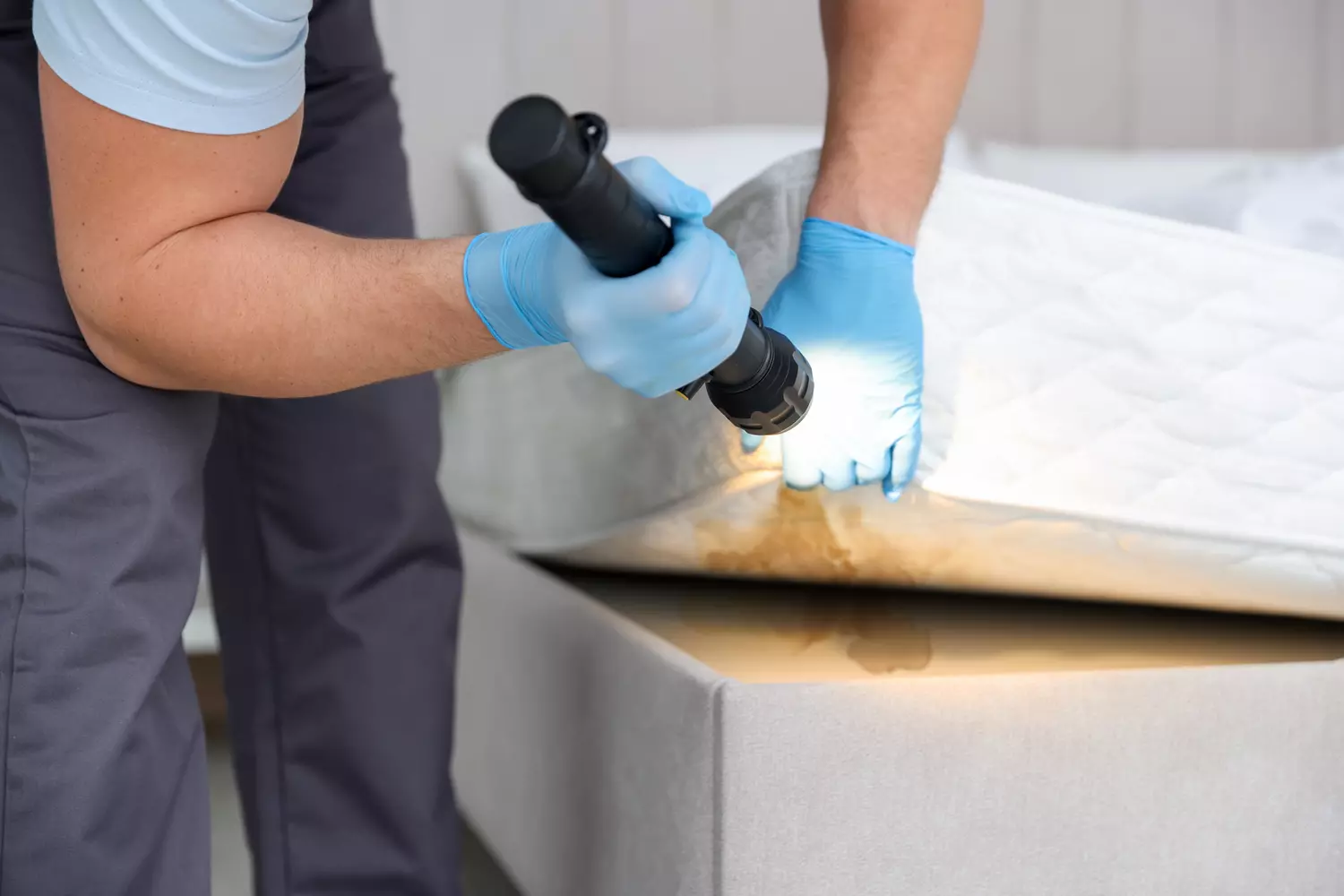
Who, the lessor or the tenant, must pay the costs of a bedbug infestation? It is the law and justice which decide on this thorny subject.
She knew her home was infested when she laid eyes on his arm. Along her skin there were a myriad of red spots: bedbugs had bitten her. “This is what alerted and pushed this tenant from Marseille to contact us,” says a tenant representative within the Adéic Logement association.
All year round, the representative supports tenants in defending their rights and in 2025, she will take charge of this file. “At first, I advised her to call in an insect killer, but she refused to cover the costs. I therefore informed the lessor, but he considered that these costs were not his responsibility.” Problem: this position does not hold up against the law.
The representative then invokes “the law of July 6, 1989, article 6 of which requires the owner to provide decent housing that does not present any risk to health”. In addition to not harming the health of the occupant, the accommodation must be free of any infestation of harmful and parasitic species (mice, cockroaches, bedbugs).

And contrary to popular belief, “these obligations of the lessor do not only take effect at the time of handing over the keys, but throughout the lease”, says David Rodrigues, legal manager within the consumer association CLCV.
So, when a bedbug infestation appears months after moving in, the lessor must pay for the intervention. It is on this legal basis that the Marseille tenant – who had moved in two years previously – was able to avoid a bill of several hundred euros (866 euros on average for households, according to Anses).
But this regulation is not absolute. “If the basic principle is that the intervention costs are borne by the lessor, there is an exception,” notes David Rodrigues. The landlord must demonstrate that the infestation is the fault of the tenant. How to prove it? Good question.
“The origin of the infestation is difficult to determine,” said the tenants’ representative. A train trip or a return from vacation abroad can constitute clues that can support the lessor’s case. But “generally” if the case is taken to court, “the decision leans more in favor of the tenant”, specifies Matthieu Bertrand Neuser, lawyer at Adéic.
And for good reason: these parasites can cover their tracks over time: bedbugs can remain inactive for up to 18 months. “Thus, even if an infestation appears 15 months after moving in, it cannot be automatically attributed to the tenant,” notes David Rodrigues.
There remains one important nuance: this rule applies especially once the infestation has been declared. If preventive interventions are carried out to ensure that there will be no bedbug infestation, part of the costs may be borne by the tenant, concludes David Rodrigues.