








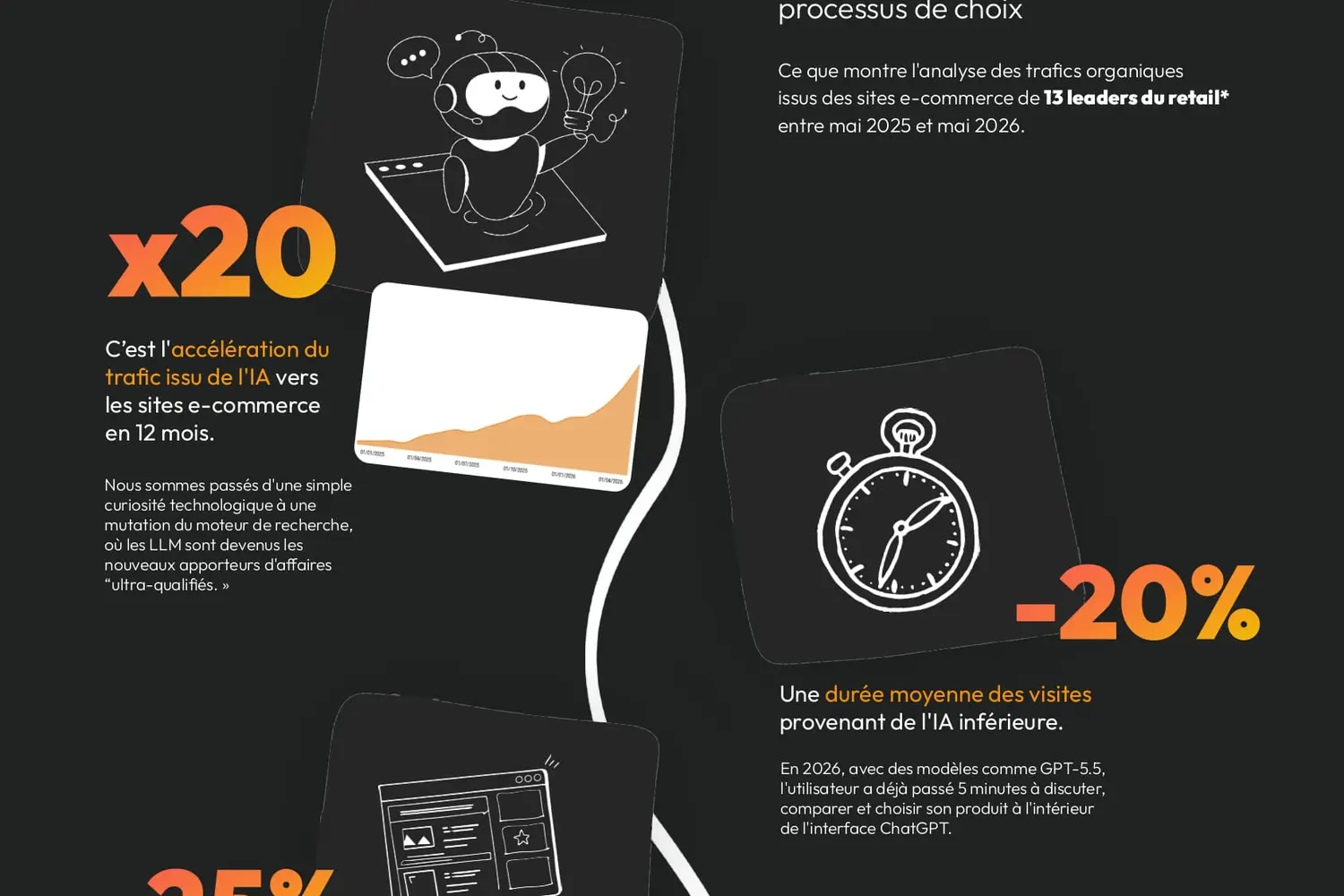
Higher conversion rate, generalization of use, increase in relative share: the lessons from the second edition of the Valiuz GEO Barometer, which analyzes traffic from AI on the e-commerce sites of 13 AFM brands.
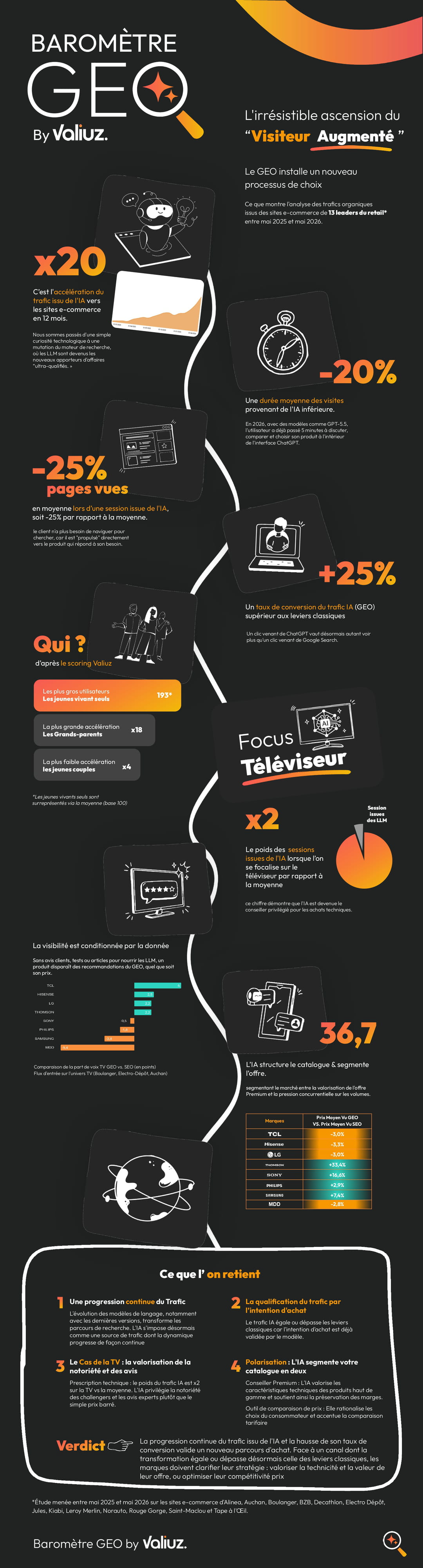
The traffic sent by the LLMs to the e-commerce sites of 13 brands of the Mulliez family association (including Auchan, BakerDecathlon or Leroy Merlin) transforms significantly better than the traffic provided by other acquisition channels, according to the second edition of the “GEO Barometer”, which Valiuz delivers to the JDN this Wednesday, July 8. The change is quite marked given that six months ago the situation was reversed : even if the conversion rate, of 1.7%, was then described as promising, it remained significantly lower than the average rate of 2.3% reached by the sites during the holiday period. There, in May, it was 1.8% for the LLM against 1.5% for the rest.
In detail, the conversion rate of the traffic brought by LLMs is higher than that obtained by all traffic sources with the exception of direct traffic, which is normal for brands established in the daily lives of French people like those of the AFM. However, this change is considered major. “This is a strong indicator: we are faced with consumers who have all the information and who only need to take out their credit card. This development reflects a better level of information received and increased confidence in conversational agents,” analyzes Amandine Launois, head of data & insights retailer at Valiuz. “A click from an LLM is now worth as much, if not more, than a click from Google Search,” she adds.
Use is becoming widespread across all age groups
While six months ago young people living alone were by far the most represented in traffic from LLMs, now families with children and seniors are also present. “The way in which these signals are progressing allows us to see that the use of conversational agents is becoming established in consumer practice. LLMs are becoming a qualified channel for selling, used by all kinds of populations,” continues Amandine Launois.
As in the previous barometer, revealed on February 5, traffic from LLMs consults fewer pages (-25% than the average) and stays there less time (-20%): logically, it arrives directly to the product page. If it remains marginal (less than 1% in 10 of the 13 brands studied), it is evolving quickly: its relative share of total traffic has been multiplied by 2.5 in six months and by x 5.5 in 12 months. “We see accelerations with each model change.” ChatGPT is omnipresent, which is why our expert expects the situation to evolve quickly with the arrival of AIO and AI Mode in France this summer.
Visibility conditioned by data
During this second edition of the Barometer, Valiuz wanted to observe the search behavior provided by these LLMs for a specific product, namely televisions, for which the World Cup generated a certain enthusiasm. The observation is clear: the traffic generated by LLMs in the pages gains market share compared to other sources of traffic. In this case, the weight of sessions from AI was twice the average. Second lesson: users are sent either to the most premium products or to entry-level models. “This reflects the demands made by consumers who are either looking for the best price or looking for quality,” explains our expert. Moral of the story: visibility is conditioned by data. Without customer reviews, tests or articles to feed LLMs, a product disappears from GEO recommendations, whatever its price, indicates the barometer.
To produce this second GEO Barometer, the Valiuz teams analyzed more than 2 million online visits between May 2025 and May 2026.


