








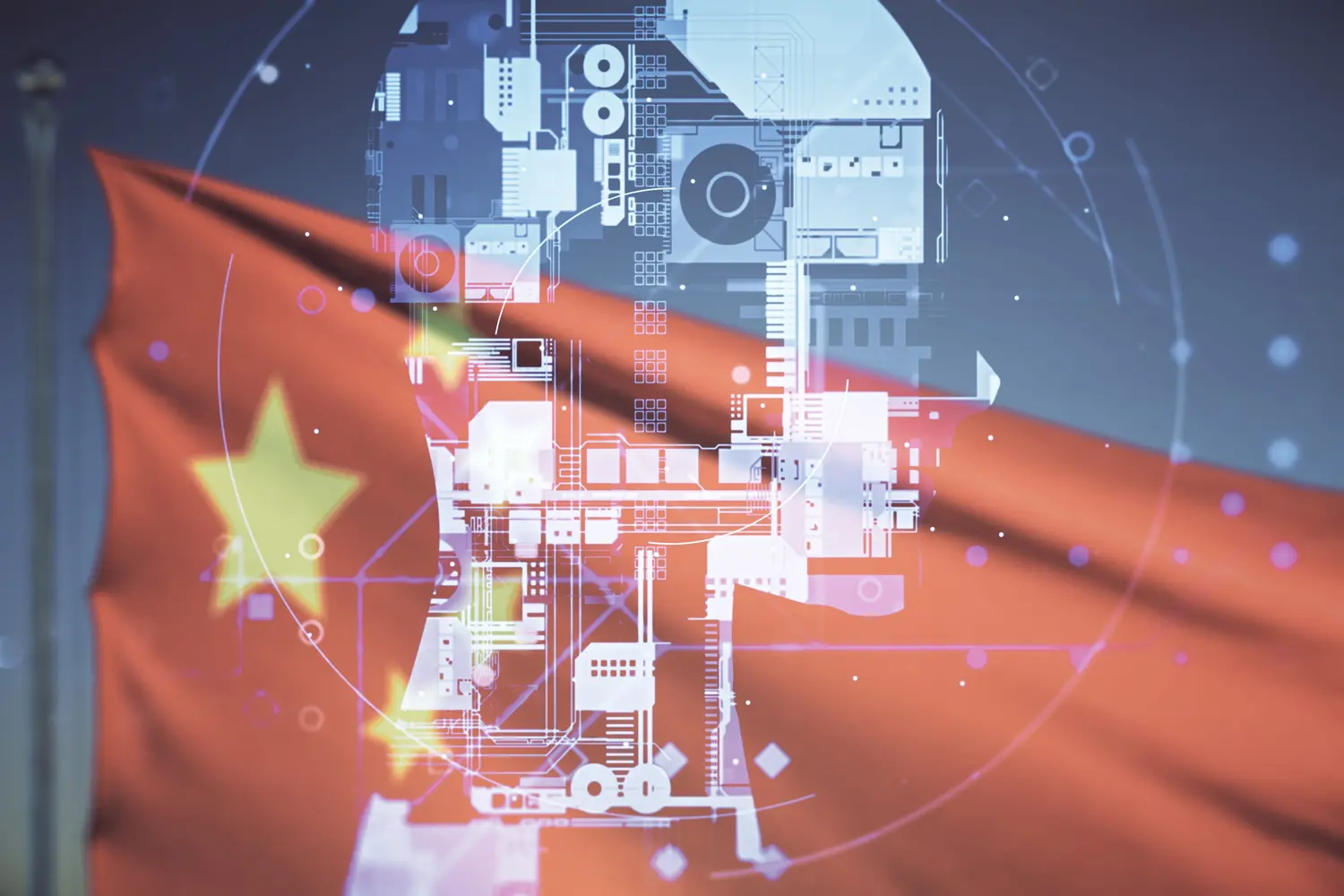
The Chinese president called for international governance of AI, insisting on cooperation, regulation and human control, while affirming China’s ambitions against the United States.
Chinese President Xi Jinping said on Friday July 17 that artificial intelligence (AI) should not be the preserve of a single country and called for cooperation during a speech at the World AI Conference (WAIC) in Shanghai. He said: “The development of AI must not be the work of a single country, but a symphony of international cooperation,” emphasizing the importance of a collective approach to overseeing this booming technology.
Xi Jinping also warned: “We must jointly oppose (…) putting the security of one country above that of others”, presumably referring to the restrictions imposed by the United States and the European Union on Chinese imports of technology.
Towards global AI governance
Foreign Minister Wang Yi and representatives of 29 countries, including Russia, signed an agreement establishing an intergovernmental cooperation group for AI. This World Artificial Intelligence Cooperation Organization (WAICO), headquartered in Shanghai, will aim to promote consultation and collaboration among its members to ensure the “healthy and orderly” development of AI, according to state media.
Faced with the risks linked to AI, disinformation, cyberattacks, algorithmic bias, military uses or malicious exploitation by pirates or terrorist groups, regulation is becoming a central issue. Xi Jinping said: “We must put in place laws and regulations, as well as technology monitoring, early warning and emergency response systems, to…ensure that AI always remains under human control,” calling for a “human-centered” approach to this technology.
A spokesperson for Chinese diplomacy declared Thursday: “China is opposed to any form of ideological division and technological blockage.” He added that Beijing intends to take advantage of the conference to “conduct open exchanges” and “reach consensus”, so that “technological progress becomes a real engine of development and prosperity for humanity”.
China’s AI market has exceeded 1.2 trillion yuan, with expected growth of more than 30% in 2026, according to official figures. China had more than 6,000 companies active in AI in 2025.
Models from Chinese startups like Moonshot AI, MiniMax or Z.ai are increasingly competing with their American competitors, while attracting users around the world thanks to their lower costs. Friday morning, Beijing startup Moonshot AI unveiled a new AI model, Kimi K3, whose announced performance could rival its best American competitors. Innovations showcased at the conference include MiniMax’s M3 model, the first phone with an autonomous AI agent, and Huawei’s Atlas 950 “supernode”, a cutting-edge AI architecture.
A strategic meeting for China
The Global AI Conference has been held every year in Shanghai since 2018 and brings together researchers, businesses and decision-makers to present the latest innovations and debate ethical and geopolitical issues. The 2026 edition, marked by the intervention of Xi Jinping, confirms the strategic importance given by Beijing to this sector and its desire to influence the definition of the rules of the game on a global scale.


