








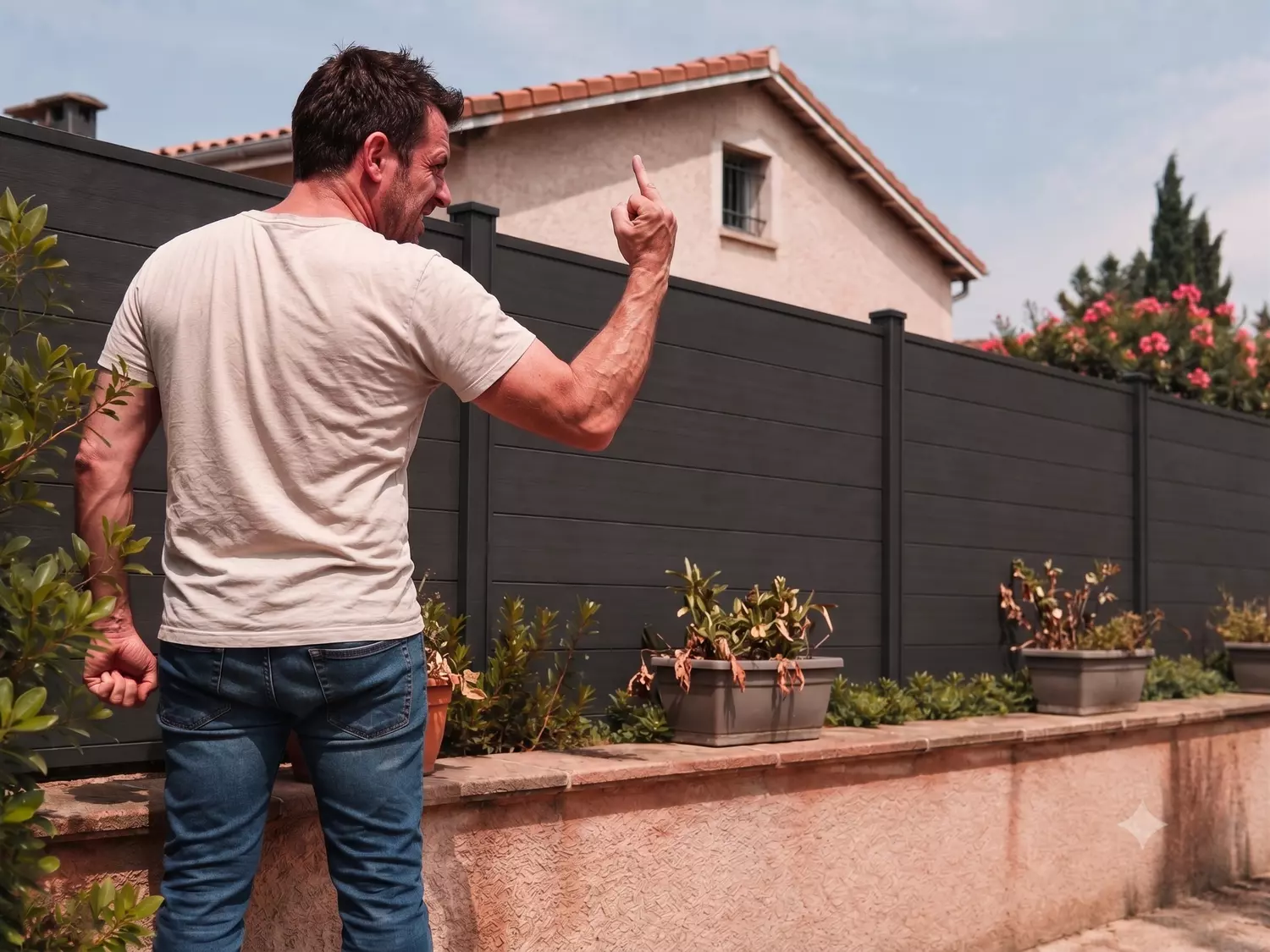
A legal dispute between two neighbors gave rise to a particularly unusual court decision. Would a French judge have rendered the same verdict?
Have you ever considered going to court over a neighborhood dispute? Mediation is sometimes impossible and judges are the only ones capable of deciding. This is exactly what happened in this dispute between two individuals in the Montreal area, Canada. One of them, Neall Epstein, was arrested by police in May 2021 for giving two fingers to his neighbor, Michael Naccache. The latter, aged 34, claims that his neighbor had been constantly harassing him for many weeks, even months.
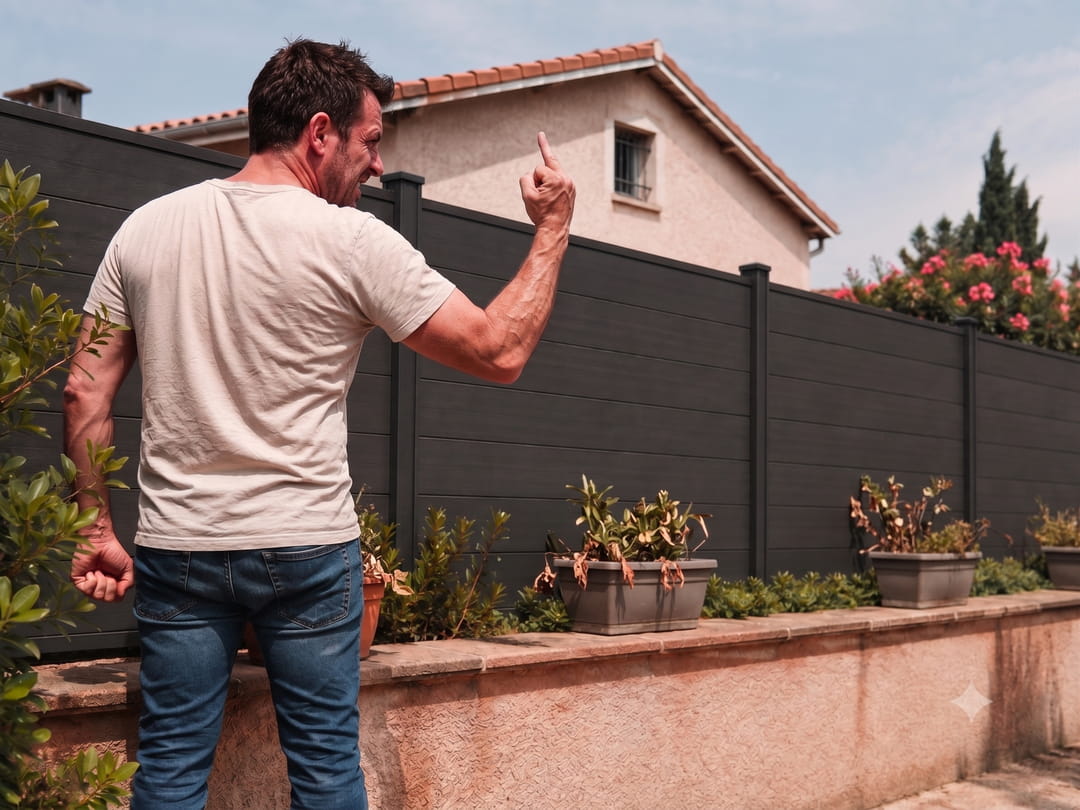
He says he was spied on by cameras and denounces threats of violence against his parents. Harassment against him and his family. On the day of the incident, Neall Epstein allegedly placed his thumb on his throat towards his neighbor, as if to slit his throat. Following this gesture, he gives two middle fingers.
It is therefore this teacher and father of two children who is present in the dock. He is patiently awaiting the verdict after two years of investigation. These years of investigation revealed that it was in reality Michael Naccache, his neighbor, who was continuously filming the entire neighborhood. Videos from these cameras also indicate that the accuser was in fact the harasser.
Judge Dennis Galiatsatos is responsible for deciding the case. He directly takes the side of the accused, believing that his arrest is a staggering injustice. Le Soleil, a cooperative media outlet for residents of Quebec, reports the following comments. “The judge writes that Mr. Naccache is very lucky not to be accused of having uttered threats himself. He believes that Mr. Naccache’s father, mother and brother are also very lucky not to have been accused in this case.”
The judge goes even further by rendering a decision that goes further than just this neighborhood conflict. “To be very clear, it is not a crime to give someone the finger (…) It is a fundamental right enshrined in the Charter, which belongs to all Canadians. It may not be civil, it may not be polite, it may not be courteous. But it does not give rise to criminal liability. Offending someone is not a crime. It is an integral part of freedom of expression,” the judge also writes Galiatsatos.
Giving a middle finger is therefore a fundamental right in Quebec. But what about France? In France, it is not as simple. On the Alexia.fr platform where Internet users ask their legal questions, a lawyer answers. “The act of giving a middle finger on a public highway can, in theory, constitute a non-public insult (article R.621-2 of the Penal Code), or even a public insult if it is addressed to a public official in the exercise of his duties (article 33 of the law of July 29, 1881),” writes Aurore Kayembe, lawyer at the Paris Bar.
Legally, a middle finger can be considered a contempt or an insult depending on the person targeted. In France, non-public insult is punishable by a 1st class fine, i.e. 38 euros at most. On the other hand, a middle finger directly addressed to a police officer or gendarme in the exercise of his duties may constitute contempt, an offense punishable by one year’s imprisonment and a fine of €15,000.