








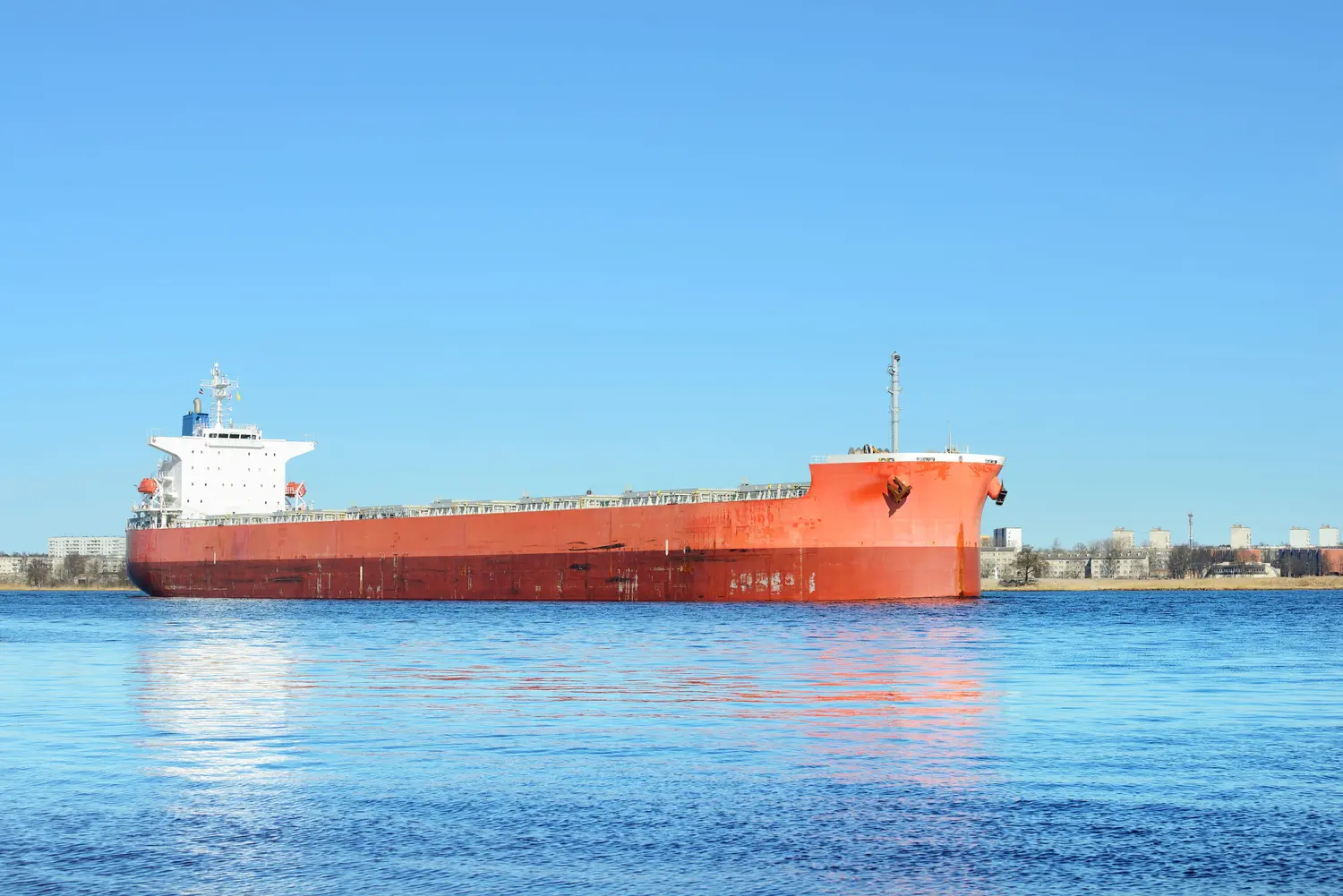
Military escalation in the Gulf is paralyzing maritime and energy trade, revealing the insufficiency of alternatives and posing systemic risk to the global economy.
Since the resumption of hostilities between the United States and Iran, the Strait of Hormuz, a strategic passage for world trade, has experienced a historic drop in maritime traffic. This situation is causing oil prices and logistics costs to soar, while highlighting the limits of the workaround solutions envisaged by the Gulf States.
A military escalation with immediate consequences
Since July 11, the United States, which justifies its offensive by Iranian attacks targeting merchant ships, has increased military operations, using kamikaze naval drones for the first time against the Bandar Abbas base. Donald Trump also reestablished the blockade of Iranian ports, threatened to strike Tehran’s nuclear facilities again and claimed the role of “guardian of the strait”, going so far as to mention a 20% right of passage before reversing this announcement.
Iran says the strait will remain closed as long as US “acts of aggression” continue. Several ships have been targeted in recent days: a Cypriot container ship caught fire after an attack, two Emirati oil tankers were struck in Omani waters and several strategic installations in the region were targeted.
Only six ships passed through the strait on Sunday, the lowest in five weeks, according to maritime tracking company Kpler. This drop in traffic is disrupting global supplies of energy and goods, while the Strait of Hormuz is a crucial crossing point for oil and liquefied natural gas.
Brent, a barrel from the North Sea, which serves as a global benchmark, gained more than 10% on Tuesday but is still far from an outbreak. The consequences on maritime transport costs are “already spectacular”, writes transport commissioner Ovrsea in his newsletter of July 15. Some routes are now surpassing their pandemic records, “a sign of the exorbitant cost of land-based workarounds”. War premiums are very volatile and can reach up to 10% of the value of a ship, to cross Hormuz, compared to 1 to 2% previously.
Gulf states are accelerating their bypass plans. The Emirati port giant DP World, owned by the Emirati government, plans to build a large port and container terminal in Fujairah, on the eastern coast of the United Arab Emirates, directly open to the Indian Ocean to reduce the dependence of Jebel Ali, the region’s main logistics hub, on the Strait of Hormuz. This project, which should not, however, be completed for around a year and a half, would move part of the flows out of the Gulf, even if this maritime coastline remains exposed to Iranian fire.
The Emirates can already export part of their oil via the pipeline linking Abu Dhabi to Fujairah. Saudi Arabia uses its East-West oil pipeline to the Red Sea and plans to increase its capacity. Iraq is examining or reactivating routes to Turkey, Syria or the Mediterranean. But none of this infrastructure can absorb the approximately 20 million barrels of oil that transit Hormuz daily. Even if all the projects currently envisaged were to see the light of day, between 7 and 9 million barrels per day would remain without an alternative solution.
A systemic risk for the global economy
The Strait of Hormuz crisis comes as the global economy showed signs of resilience. Growth had so far held up better than expected, according to the International Monetary Fund (IMF). Activity slowed, going from an annualized rate of 3.8% in the fourth quarter of 2025 to 3% while the institution expected only 2.7% in its April forecasts. After slowing since the start of 2024, global inflation is expected to rise to 4.7% in 2026 compared to 4.1% in 2025, driven by the rise in energy and food prices.
For Tewfik Hamel, Hormuz has become a real “geopolitical tax” imposed on the world economy.


